If you can’t find what you are looking for, feel free to contact us!
We’ve gathered the most frequently asked questions about VebaBox, our Active and Passive solutions, and their applications across food, pharma, lab and healthcare logistics.
Still unsure? Reach out to us for personalized advice.
This section answers the most frequently asked questions about VebaBox Active, focusing on product features, performance, and usage. Here you’ll find clear informations to help you understand how the solution works and how it fits into your cold chain.
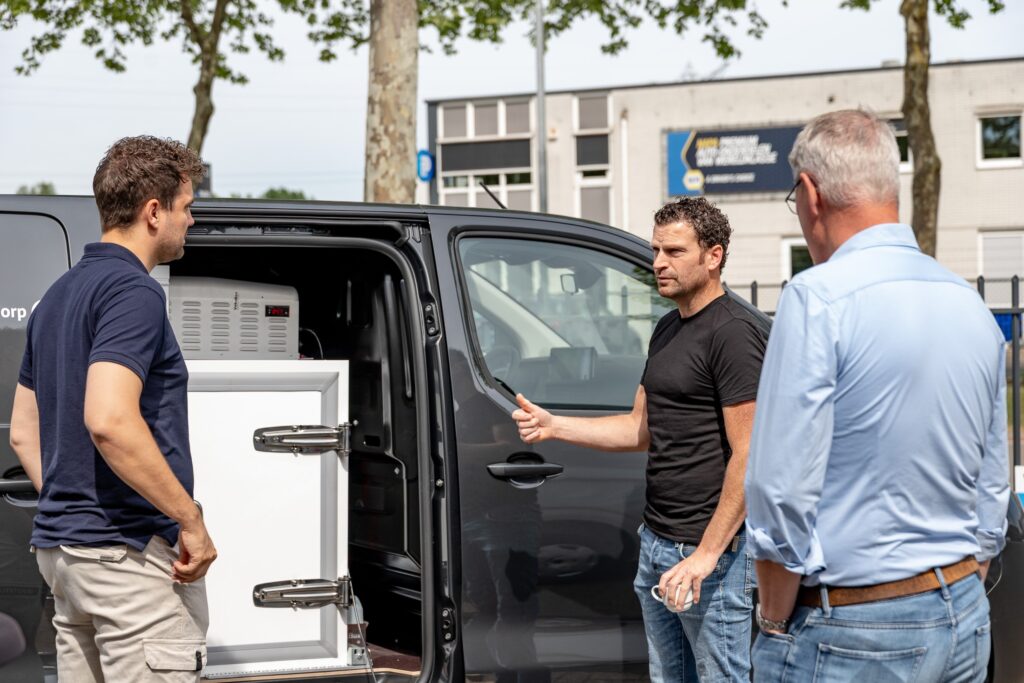
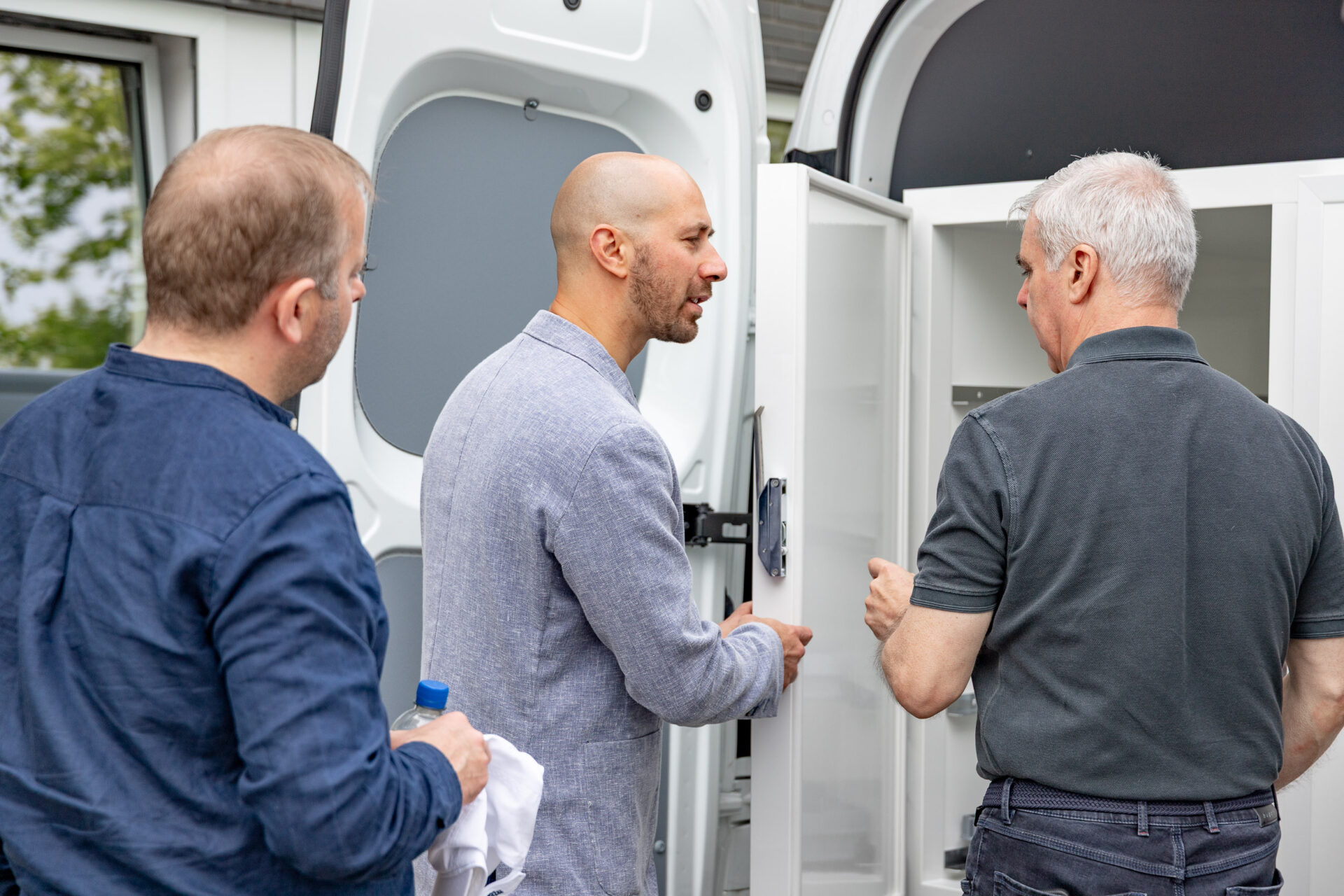
VebaBox active is a refrigerated container that can be installed inside a standard commercial vehicle, transforming it into a temperature-controlled transport solution without structural modifications.
VebaBox can be installed in most light commercial vehicles (LCV’s) and vans. Compatibility depends on vehicle dimensions (L1/L2/L3 and H1/H2/H3), which determines the correct VebaBox model.
No. VebaBox Active is a plug-and-play solution that can be installed and removed without permanent vehicle modifications.
VebaBox solutions are available in two ranges: +2ºC to +25ºC, or -20ºC to +25ºC.
Yes. Certain models allow for dual or multiple compartments, enabling simultaneous chilled and ambient or frozen transport.
The system runs on the vehicle’s 12V/24V battery during transport and can be connected to external 230V/110V mains power when parked. Another possibility is connection a powerpack, this was your VebaBox will continue running even during stops in which you turn off contact.
This depends on insulation, ambient conditions, and battery size. Typically, the box maintains temperature for several hours, and continuous operation is possible with external power.
Our standard models range from 375 liters up to 8,000 liters of internal load capacity, depending on vehicle type and configuration.
Depending on the model, VebaBox can add a little as 80 kg up to 300 kg to the vehicle.
Every VebaBox includes a digital display and temperature control system. Data logging and telematics integration are available as options. As an option, a remote control/dashboard monitor is available, which shows the temperature in the cabin. It can be mounted in the cabin on different places, so the driver can check temperature without stopping and getting in the loading area.
Yes, the VebaBox models can be supplied with ATF/FRC certification where required.
Yes. Since it is not a permanent conversion, the VebaBox can be relocated to another compatible vehicle.
The insulated sandwich panels are made of PUR or XPS, depending on the model. Profiles are aluminium or robust plastics, while the locking systems and hinges are made of high-quality stainless steel for durability and hygiene.
The interior is designed for easy cleaning with smooth surfaces. Routine maintenance of the thermal unit is recommended, usually once per year. Additionally, for easier cleaning and higher durability there is a possibility to install an aluminium loading floor.
No. Because the installation takes between 4-6 hours, depending on the model and vehicle type. The installation can be done by a VebaBox dealer or at a partner installer of your choice/near you.
Standard available accessories are a dashboard monitor, powerpack (for back-up and standalone operation), wire mesh guards to protect the cooling engine, LED lighting, and door sensors.
Options include shelving, crate systems, flooring, pallets, wheels, or other fittings that can improve efficiency, loading, and handling.
Yes. All VebaBox Active units are tested in ambient condition up to 40ºC, and some models have been tested successfully up to 50ºC outside temperature.
With regular maintenance, a VebaBox typically lasts 10-15 years, often longer than the vehicle lifecycle.
This section answers frequently asked questions about how VebaBox solutions help reduce operational costs. Topics include fuel efficiency, vehicle utilization and cost saving achieved through smarter temperature-controlled transport.
By eliminating a bulky roof unit (less drag), using efficient compressors and high-quality insulations, a VebaBox cuts fuel use by up to 15% compared to traditional refrigerated vans. Additionally, a traditional refrigerated vehicle is also much heavier, compared to a vehicles with a VebaBox, resulting more fuel efficiency.
Yes. With no roof-mounted diesel engine and fewer moving parts, maintenance costs can be reduced by up to 30% over the vehicle lifecycle.
Absolutely. Because a VebaBox can be reused across multiple vehicles, you swap vans every 3-5 years while keeping the same cooling solution, saving up to 75% on investment costs at each swap.
With precise temperature control, digital monitoring, and alarms, the risk of spoilage is minimized, reducing claims and insurance-related losses by thousands of euros per year in some fleets.
Yes. Since there are no permanent modifications, vans can be resold at 10-20% higher value compared to permanently converted refrigerated vehicles.
Yes. Consistently temperature control means less spoilage, some customers report a 50% reduction products waste.
Yes. Running the VebaBox on mains power when parked costs up to 80% less than idling the engine or using a diesel refrigeration unit. Oftentimes, in big cities this is also illegal.
Yes. Dual-temperature zones and customized loading options allow for mixed loads in one trip, reducing fleet size or journeys by up to 20%.
When combining fuel savings, lower maintenance, longer lifecycle use, and reduced products waste, fleets can achieve up to 60% savings versus traditional refrigerated vans.
With 15% fuel savings, 75% reinvestment savings on vehicle swaps, and overall up to 60% lower TCO, most customers see ROI within 2–3 years.
"*" indicates required fields
"*" indicates required fields

 Français
  Čeština
  Gaeilge
  Nederlands
  UK
UK  Canada