
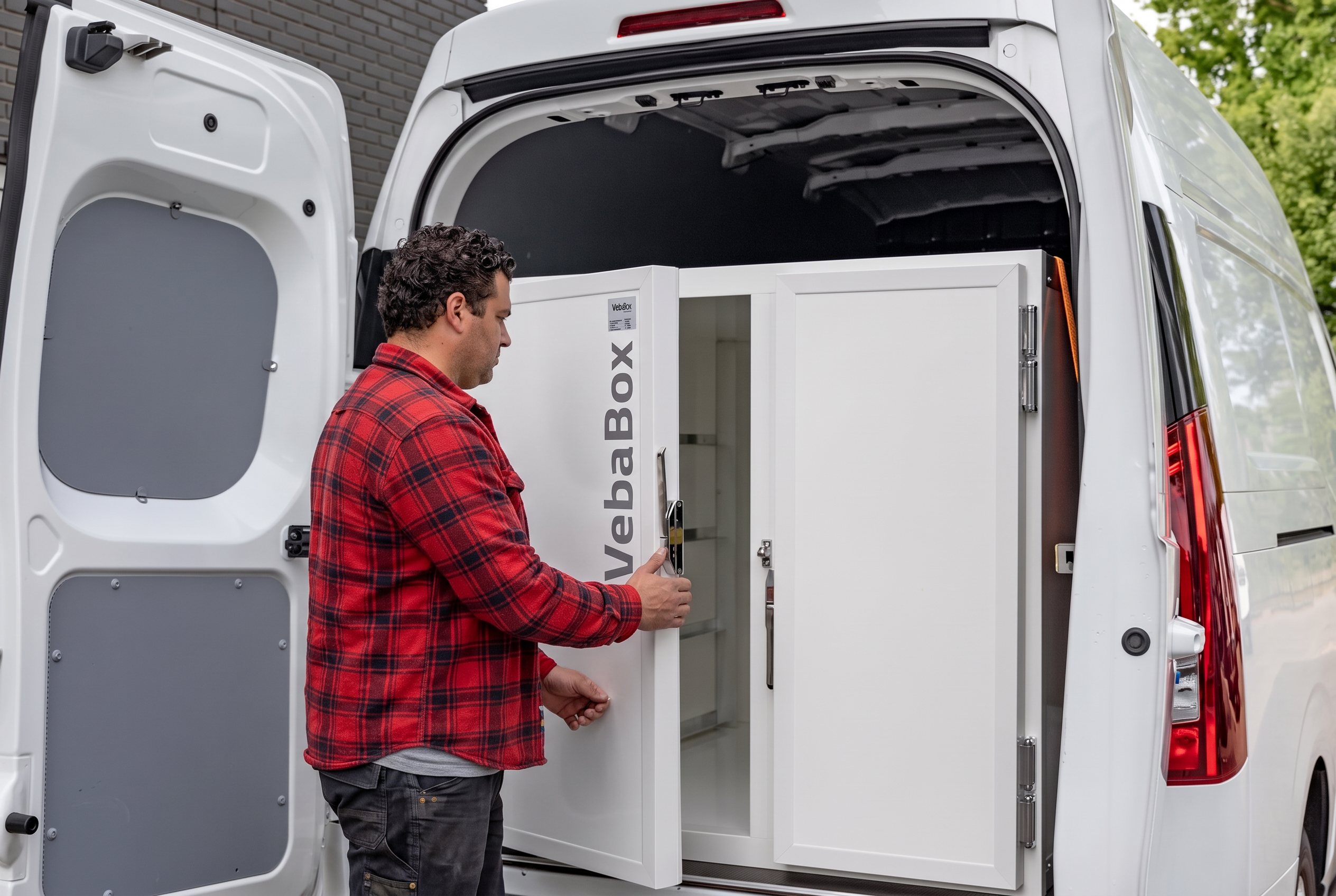
Active refrigeration systems that zone different compartments or deploy two separate thermal units at different setpoints, and passive insulated transport boxes configured with independent (PCM) cooling plates tailored to each temperature requirement.
Why dual-temp still challenges most fleets
Traditional dual-temperature transport locks you into one of two expensive approaches. The first: purpose-built multi-compartment refrigerated vehicles with fixed thermal zones. The second: running separate routes for chilled and frozen goods. Both add fleet cost, operational complexity, and routing inefficiency, especially when delivery demands shift and your vehicle configuration cannot.
How active refrigeration delivers dual-temp capability
VebaBox Active allows a fleet to cool specific zones within the vehicle while keeping other areas at ambient temperature. The mechanism is straightforward: the system either partitions cargo space so refrigeration applies only where needed, or uses a dual-temp box fitted with two separate thermal units, each set to a different temperature. This means fresh produce at +2°C and frozen goods at -18°C travel in the same vehicle, on the same route, at the same time. Route efficiency improves because the vehicle adapts to the load, not the other way around.
How passive insulation supports dual-temp distribution
VebaBox Passive takes a different approach. Instead of zoning a single refrigerated space, it deploys separate insulated transport boxes, each configured with its own (PCM) cooling plate specification. One box holds chilled goods with a PCM formulation that maintains +2°C to +8°C; another holds frozen stock with a PCM engineered for sub-zero temperatures. Both travel in the same vehicle, or sit side by side in the same warehouse. Each box maintains its required temperature independently, without power, without cross-contamination, and without requiring the vehicle itself to refrigerate.
What this modularity removes from your operation
Both approaches remove the need for a dedicated multi-zone refrigerated van. Fleet complexity falls because you are no longer locked into one fixed vehicle configuration. A standard vehicle carrying modular refrigerated or insulated boxes adjusts temperature zones to match each delivery’s specific requirement. When tomorrow’s load profile changes, the same vehicle handles it without refit or route duplication.
Dual-temperature distribution works when the temperature control adapts to the cargo, not when the cargo adapts to the vehicle.
You might also be interested in
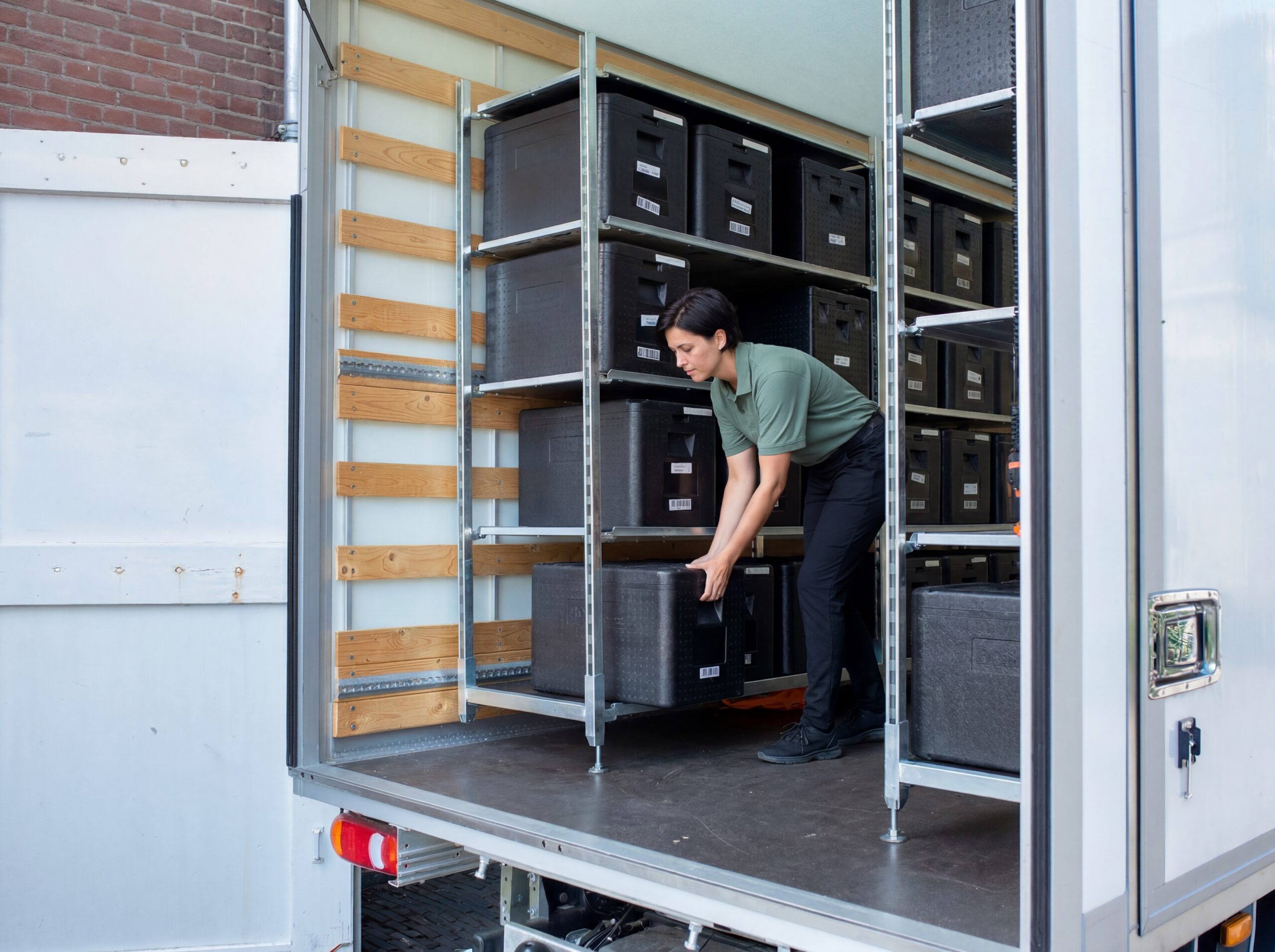
Carrying multi-temperature goods on one route
How can a delivery vehicle carry chilled, frozen and ambient products on the same route? A delivery vehicle can carry chilled, frozen and ambient products on the same route by using separate temperature-controlled compartments or boxes. This approach creates independent thermal conditions around each product group, allowing different temperature zones to coexist in a single vehicle without requiring the entire load space to operate at one fixed temperature.
Read more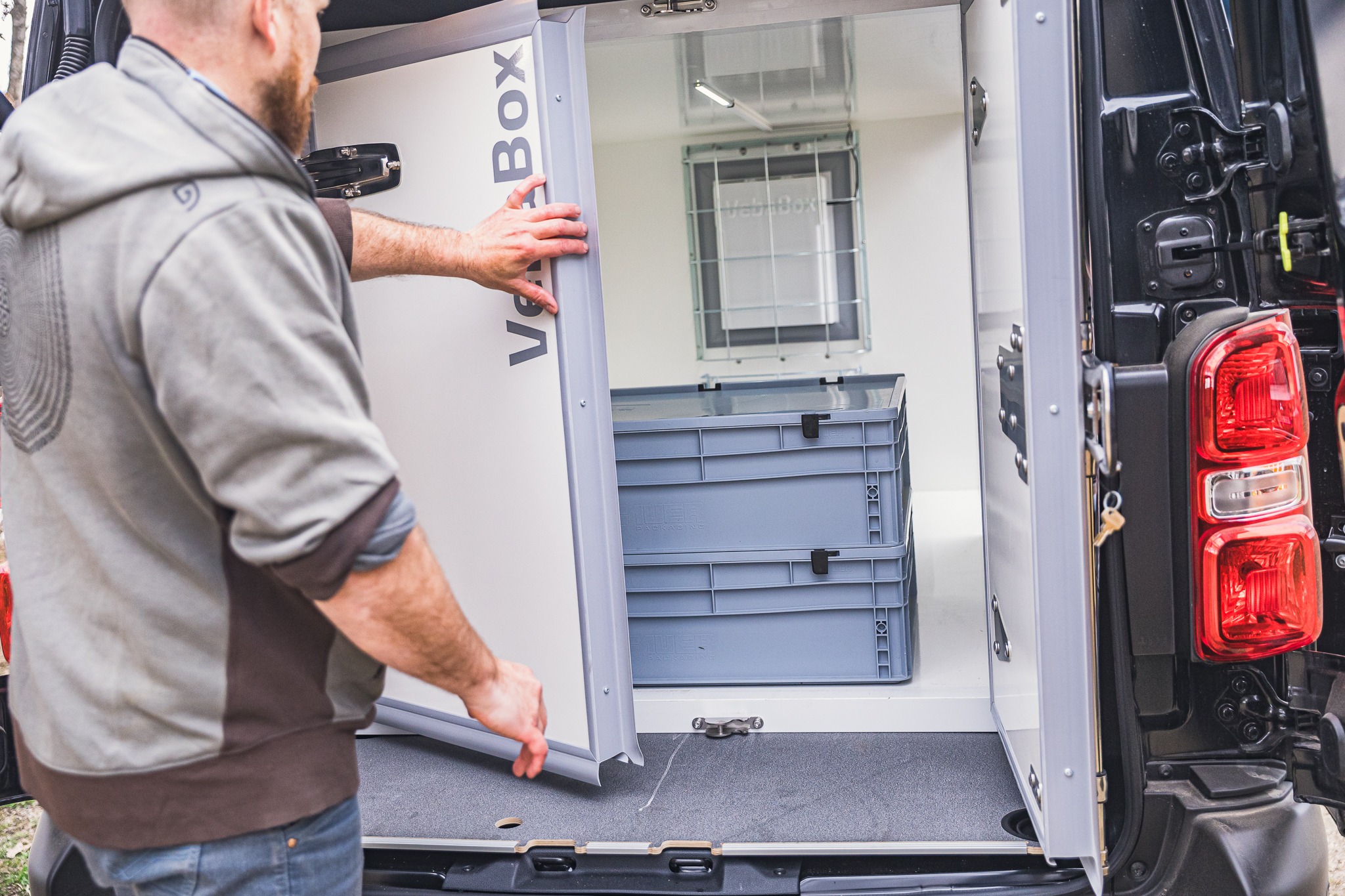
The alternative to the refrigerated van
What is the best alternative to a refrigerated van for local food and beverage deliveries? The best alternative to a refrigerated van for local food and beverage deliveries is a removable temperature-controlled box system that conditions the cargo space itself rather than the entire vehicle. Active systems with powered refrigeration suit recurring routes with frequent door openings and multiple stops, while passive systems using insulation and and cooling plates work well for shorter journeys and smaller consignments. Both allow a standard van or car to carry chilled or frozen products on one round and other goods on the next, eliminating the need for dedicated refrigerated vehicles when volumes and product types vary.
Read more
Add transport capacity without converting a vehicle
How can laboratories add temperature-controlled transport capacity without converting an entire vehicle? Laboratories can install removable, cargo-focused temperature-control systems in conventional vans or other suitable vehicles. Rather than conditioning the entire load space, these systems control the smaller environment immediately around the samples, allowing standard fleet vehicles to transport temperature-sensitive material without permanent refrigeration conversion.
Read more