Passive delivery is a way to protect temperature-sensitive products during transport without using a continuously powered refrigeration unit.
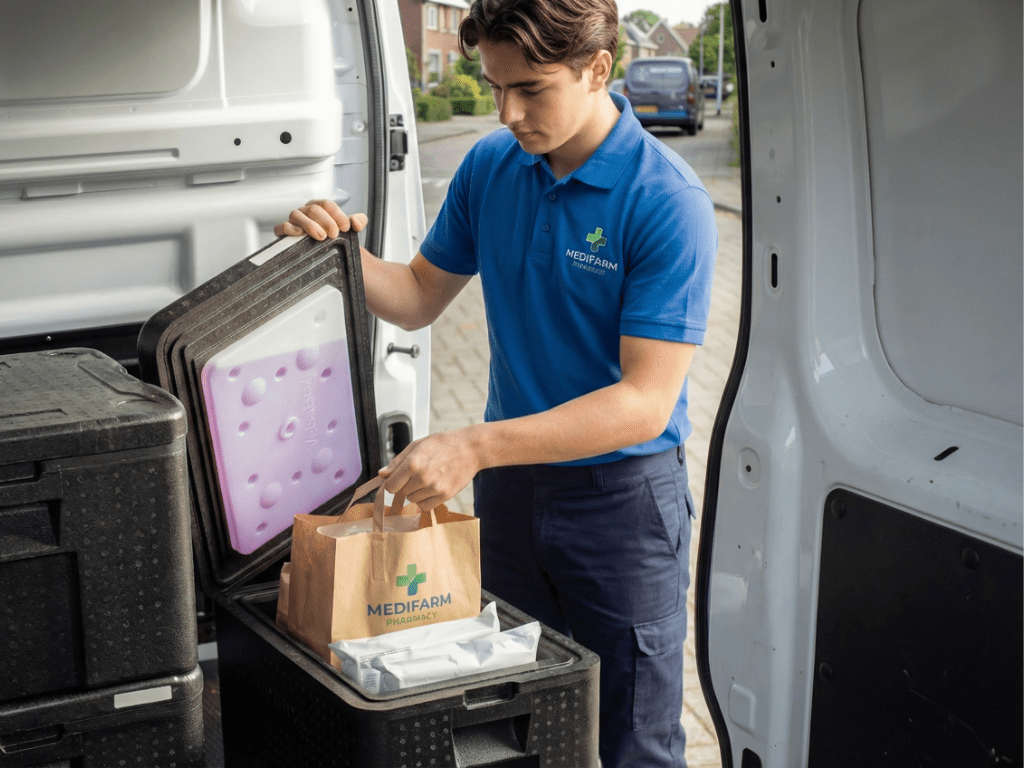
The passive cooling solution
Passive delivery is a way to transport temperature-sensitive products without relying on a continuously powered refrigeration system.
Instead of generating cold during the journey, VebaBox Passive uses a combination of insulation and preconditioned cooling elements to maintain the required temperature for a defined period.
Each box is a self-contained, insulated container designed to maintain chilled, frozen or controlled ambient conditions without any electrical connection. Inside the box, specially conditioned cooling plates absorb incoming heat, while the insulation slows down heat transfer from the outside environment. Together, they help keep the internal temperature stable throughout the journey.
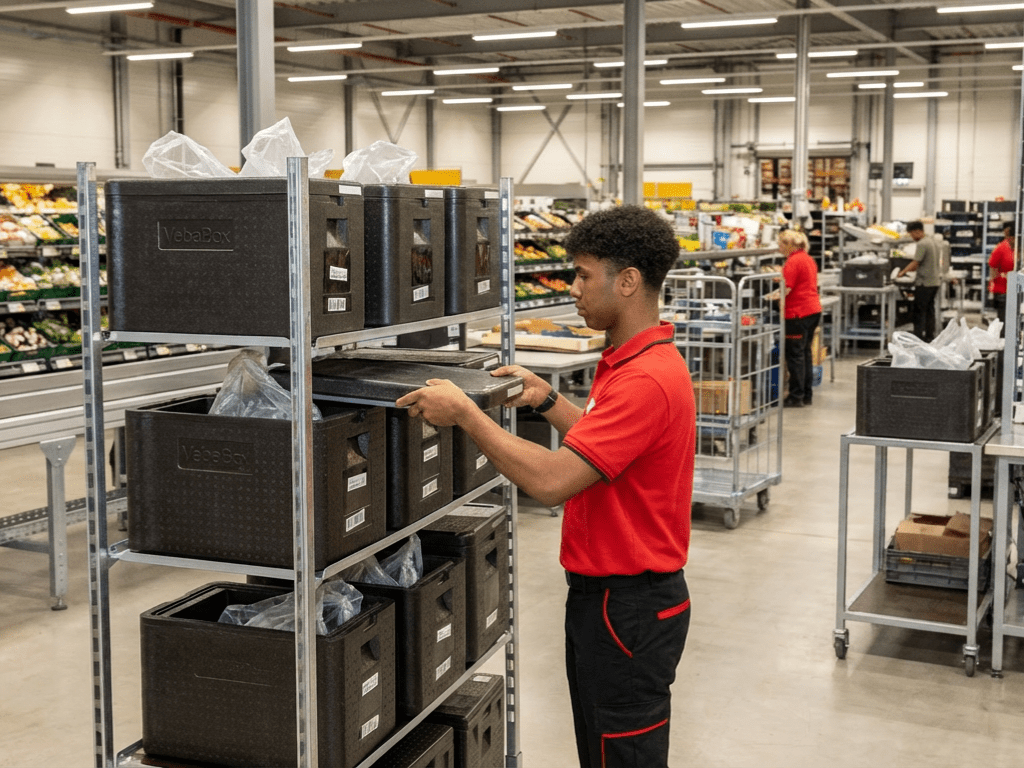
Our passive cooling system relies on three key components for effective temperature control.
The freezer pre-conditions the cooling plates (PCM) by freezing them, storing latent thermal energy. The plates, placed inside the container, actively regulate temperature by absorbing ambient heat at a specific threshold. The tote, with high-performance insulation, surrounds the cargo and PCM, minimizing external heat transfer and maintaining a stable internal climate.
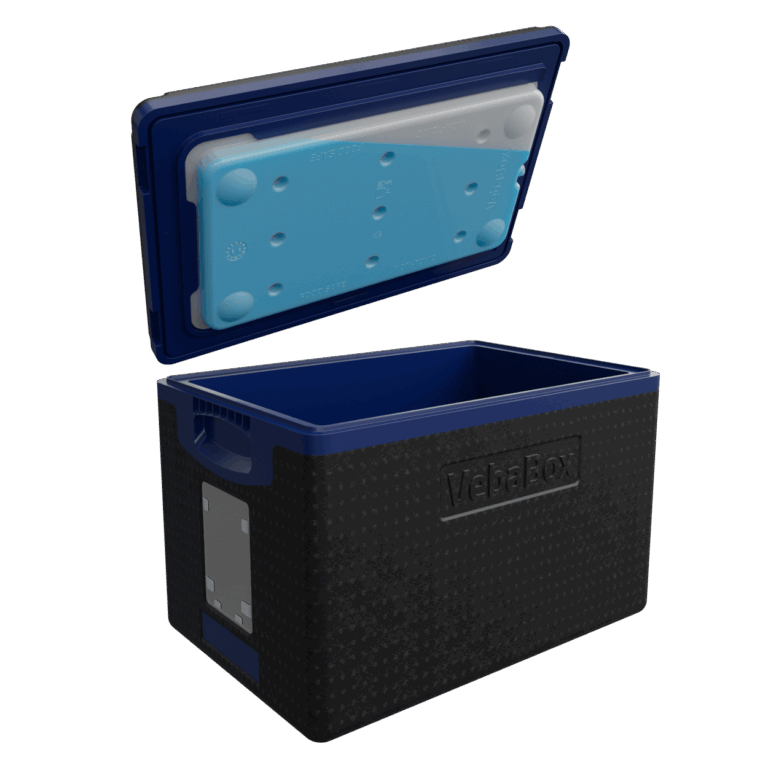
Slows heat transfer from outside
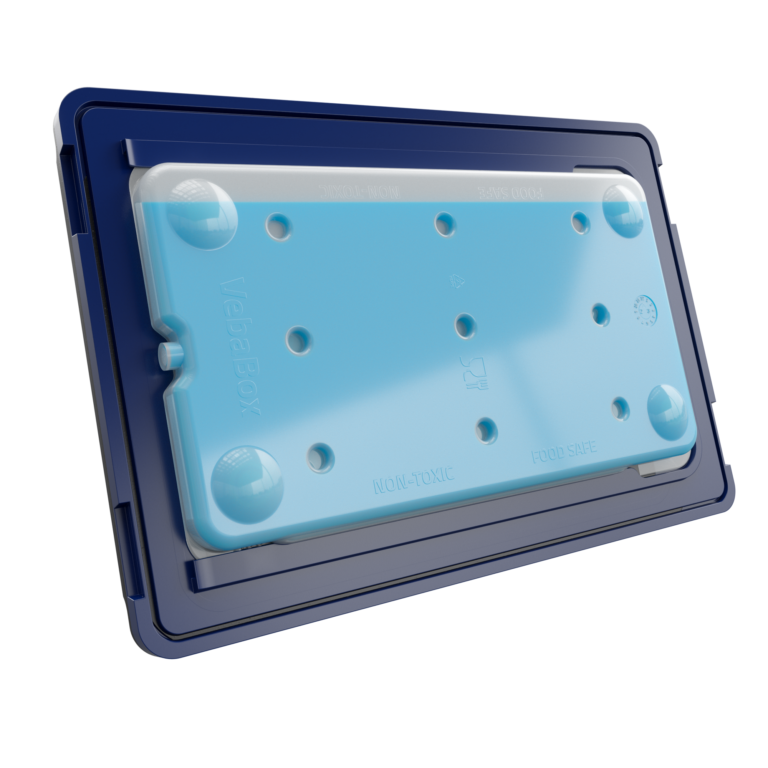
Absorbs temperature at a fixed level
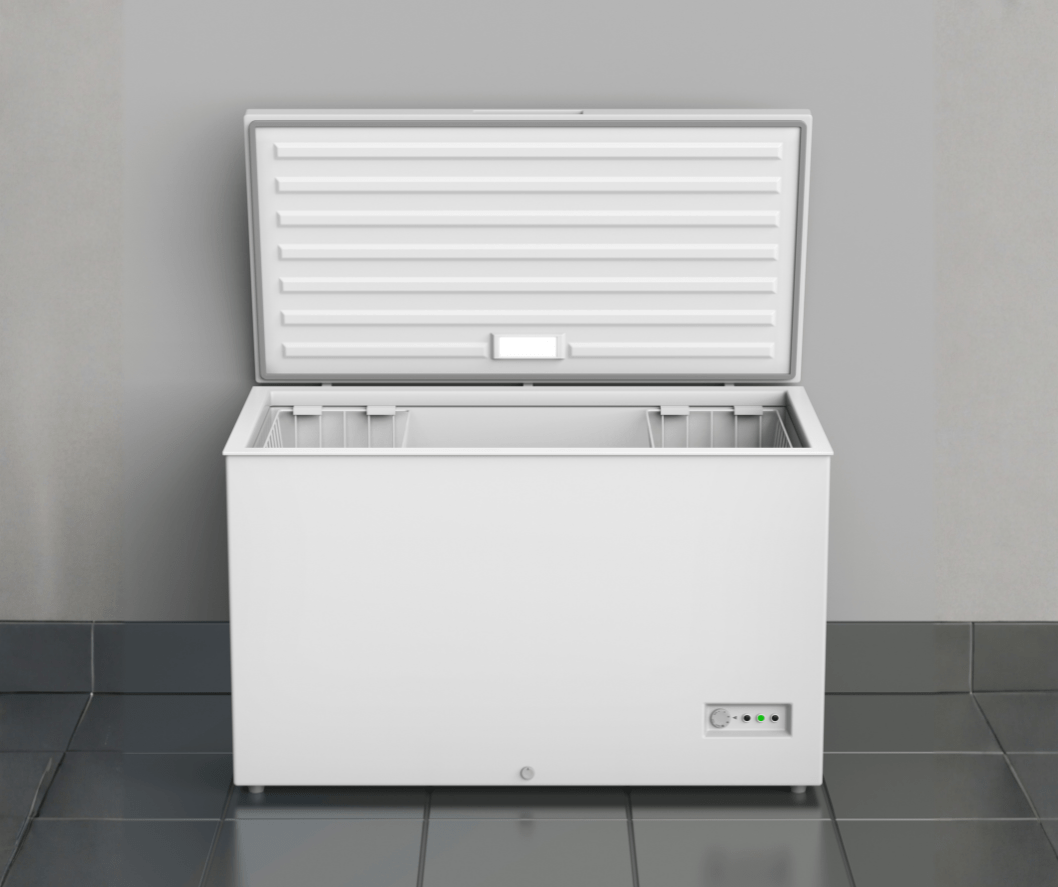
Stores temperature inside the plate
Your partner in Cold Chain solutions
We understand the unique requirements of your sector.
From storage to delivery: stability and protection for essential medication.
Explore our solutionsChoosing between passive and active cooling depends on how predictable your operation is and how much control you need during transport. The choice does not always have to be between Passive and Active.
Both systems can be combined within the same operation to provide additional flexibility.
For example, you may already use a larger Active VebaBox to transport chilled products but occasionally need to carry a smaller frozen order on the same route. Instead of investing in another complete system, a compact Passive solution with the appropriate cooling plates can be placed alongside the existing set-up.
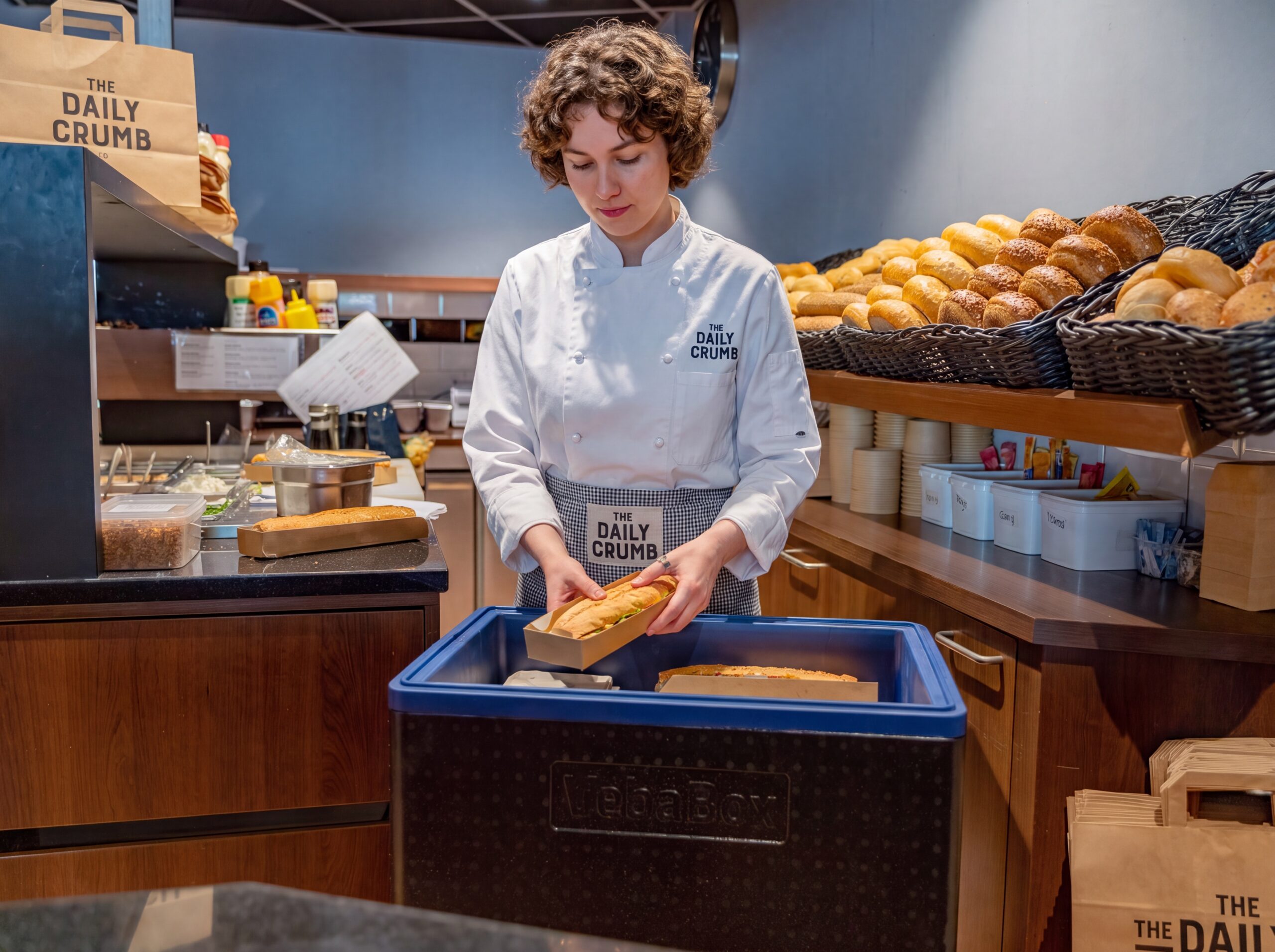
Passive cooling uses insulation and conditioned cooling plates to maintain the required temperature without a continuous electrical connection.
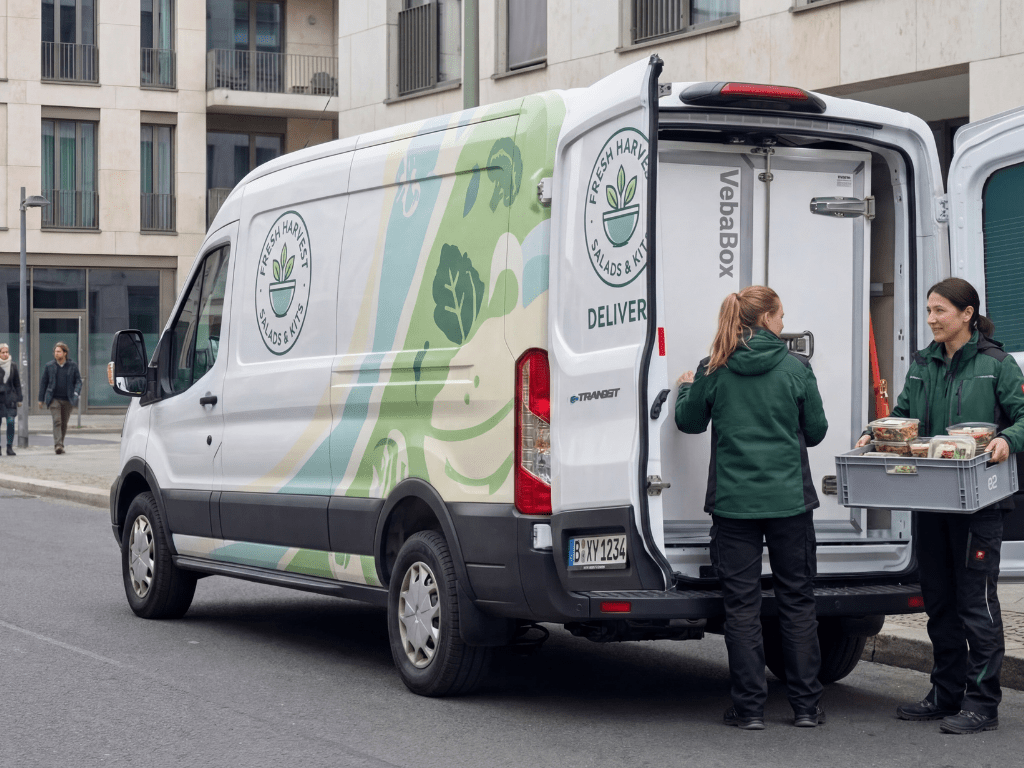
Active cooling uses powered refrigeration to regulate the internal temperature throughout transport.
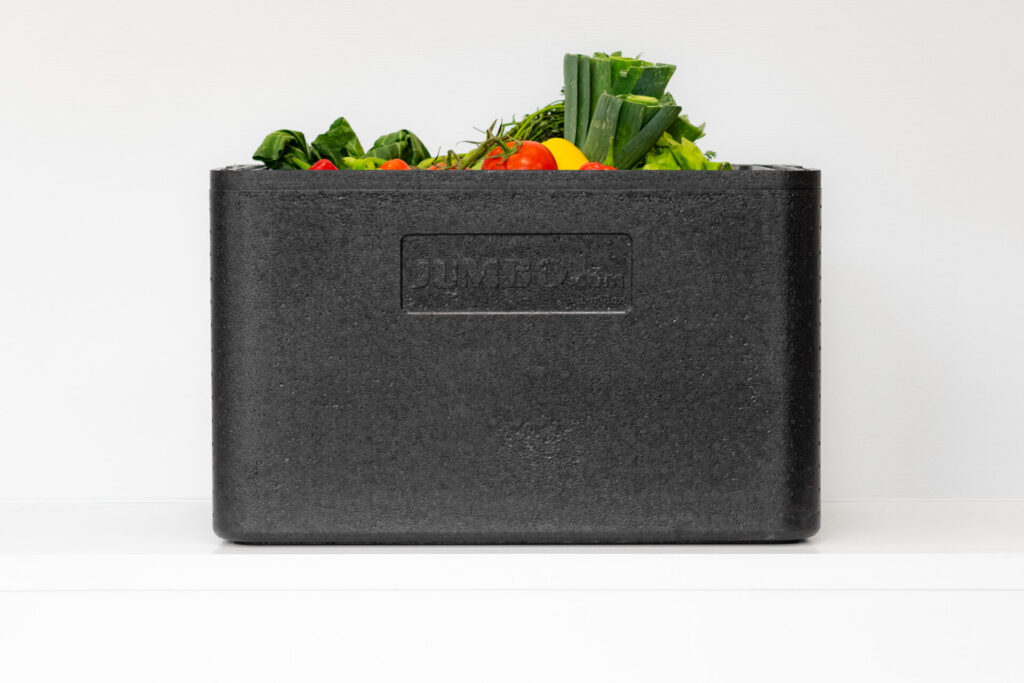
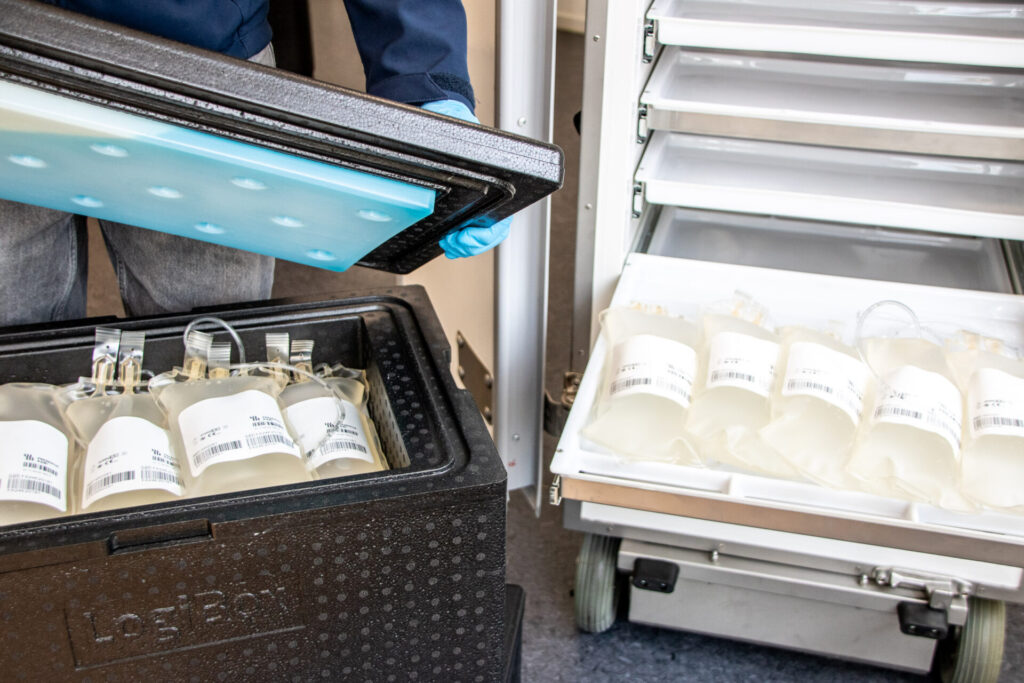




Cooling plates (PCM) store thermal energy before they are placed inside the tote.
They are conditioned at a defined temperature so they can absorb heat entering the tote during transport. As the surrounding temperature changes, the material inside the element changes phase and helps maintain a stable internal temperature.
"*" indicates required fields
"*" indicates required fields

 Nederlands