
 Nederlands
 Start with the transport task
Temperature-controlled transport begins before you choose a box or cooling method. Map the delivery process first:
- What is the required temperature range?
- Is the product chilled, frozen or held at another controlled temperature?
- Has it already reached its transport temperature before loading?
- How long is the route, including loading, stops and handovers?
- How often will staff open the box during the route?
- What ambient temperatures can the system face?
- Which vehicles will carry the load?
- Is vehicle power available throughout the journey?
These details determine whether you need powered refrigeration or a passive configuration. They also affect box size, loading method and operating procedure.
Use a removable box instead of converting the whole van
A traditional refrigerated van cools a fixed cargo area. This can work well when the vehicle carries temperature-sensitive food every day and requires most of its load space for that task. It can be inefficient when demand changes by route, day or season.
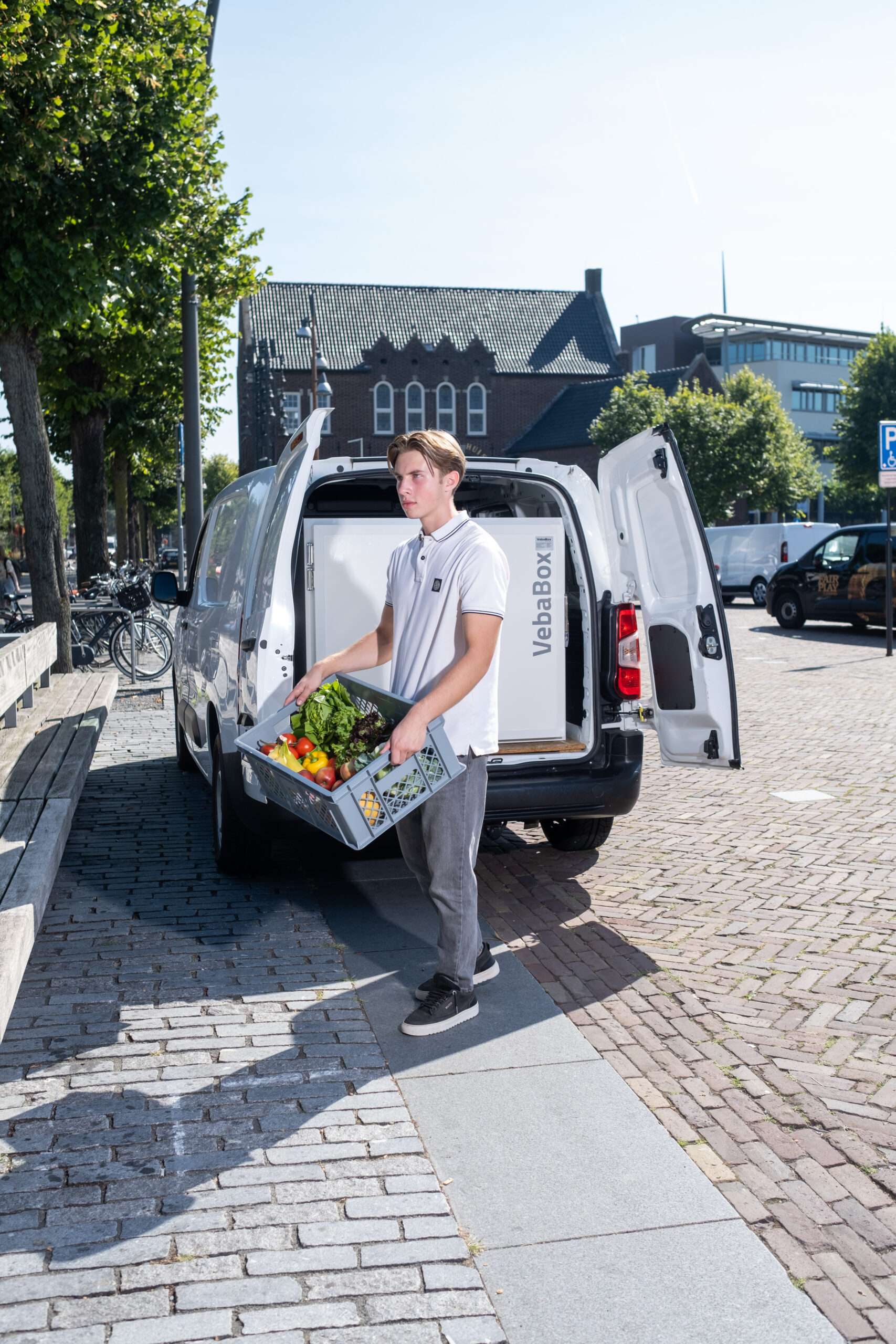
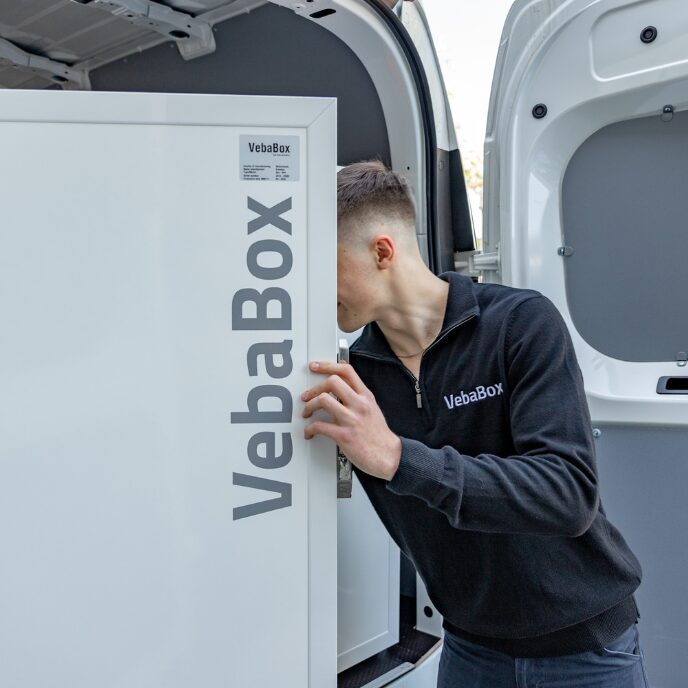
VebaBox Active creates a controlled space inside an existing commercial vehicle. You load the food into the box, secure the box in the vehicle and remove it when the delivery work is complete. The vehicle remains available for ambient goods or other jobs.
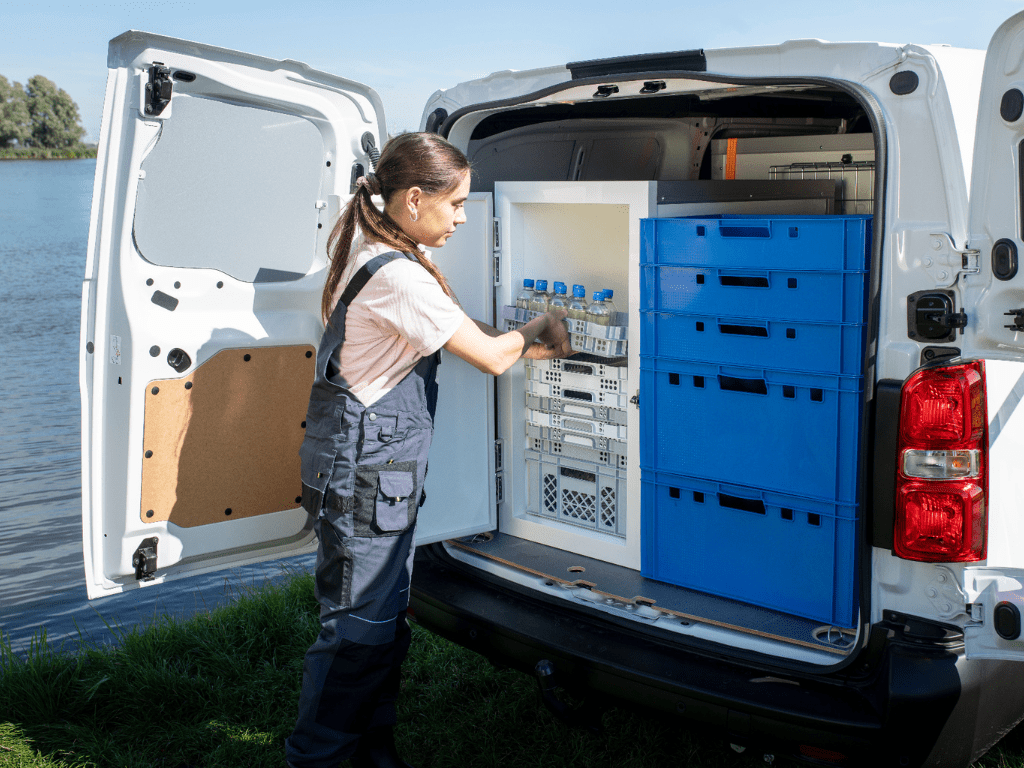
This approach can also support mixed loads. For example, you can carry chilled food inside the VebaBox while using the remaining load space for products that do not need cooling. The exact arrangement must match the vehicle, payload and load-securing requirements.
Because the cooling equipment is not permanently built into one van, you can move capacity between suitable vehicles. A replacement vehicle can take over a route without requiring another full conversion, subject to the agreed installation and operating setup.
Choose powered cooling when the route needs active control
VebaBox Active uses powered refrigeration to control the temperature inside a removable box. It fits food distribution work where routes are longer, doors open repeatedly or operating conditions require continuous cooling.
The box is installed in a suitable commercial vehicle and connected to the specified power source. The correct configuration depends on the required temperature range, box size, vehicle and route. We assess these points before selecting the refrigeration system and installation method.
This gives you refrigerated capacity without dedicating the complete vehicle to chilled or frozen transport. If delivery demand changes, you can remove the VebaBox or use it in another compatible vehicle rather than leaving an unused converted load area in the fleet.
Choose passive temperature control when vehicle power is unavailable
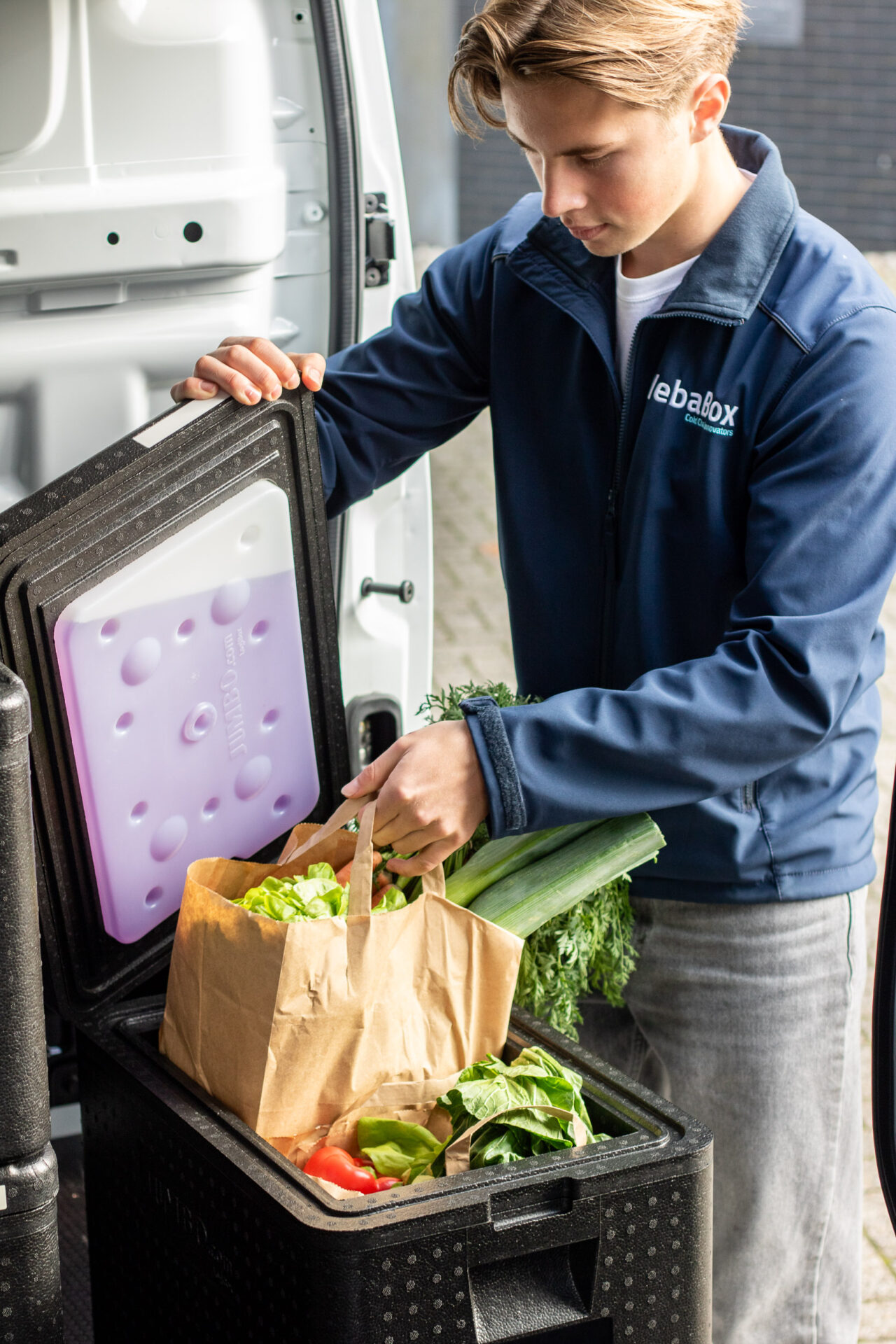
VebaBox Passive maintains a validated temperature range without a connection to the vehicle. Its insulated body limits heat transfer, while a cooling element (PCM) absorbs or releases heat at a selected temperature.
The food must reach its required transport temperature before loading. A passive box maintains that condition. It does not pull warm products down to temperature.
Before each route, you condition the cooling element according to the agreed procedure, place it in the box and load the pre-conditioned food. The validated duration applies to a defined combination of cargo, temperature range, PCM, loading pattern and ambient conditions.
Passive cooling can suit smaller loads, routes without a dependable power supply and handovers where the goods leave the vehicle. The same box can continue protecting the food during transfer into a building or temporary holding area.
Build the operating process around real route conditions
A cooling system only performs as intended when the loading and handling process matches the tested configuration. Before rollout, define:
- How the food reaches its loading temperature.
- How staff condition and place the cooling elements when using a passive box.
- How much product goes into each box.
- Where the box sits and how it is secured in the vehicle.
- How often staff open it and for how long.
- How you clean, inspect and store the equipment.
- How you record temperatures when your HACCP plan or internal procedure requires evidence.
Test the setup on a representative route before wider use. Include typical stops, loading delays, door openings and seasonal ambient conditions. This checks the complete process rather than the cooling equipment in isolation.
Compare the operational cost, not only the purchase price
A permanent van conversion and a removable system create different costs over the vehicle lifecycle. Compare the vehicle downtime for installation, how often you need refrigerated capacity, available payload, energy use, maintenance and what happens when the vehicle is replaced.
A removable VebaBox can continue in service when a compatible vehicle changes. It can also limit the number of dedicated refrigerated vehicles needed when routes do not require cooling every day. The business case depends on your delivery pattern, so use actual route frequency and load volume rather than an assumed full-time use case.
The practical answer is to match the cooling method to the food and route, then confirm it under the conditions your team handles each day.
Ask VebaBox to assess your operation, required temperature range, route and vehicle so you can keep deliveries running smoothly.
You might also be interested in
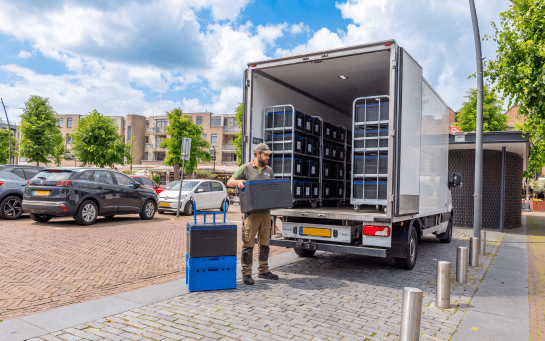
How to keep medicines at the rigth temperature during transport without electricity?
A temperature excursion can leave you with quarantined medicines, an investigation and no clear proof that the shipment remained suitable for use. The best passive cold chain container is therefore not simply the box with the longest stated duration. It is a reusable configuration validated for your medicine's temperature range, route, load and handling process.
Read more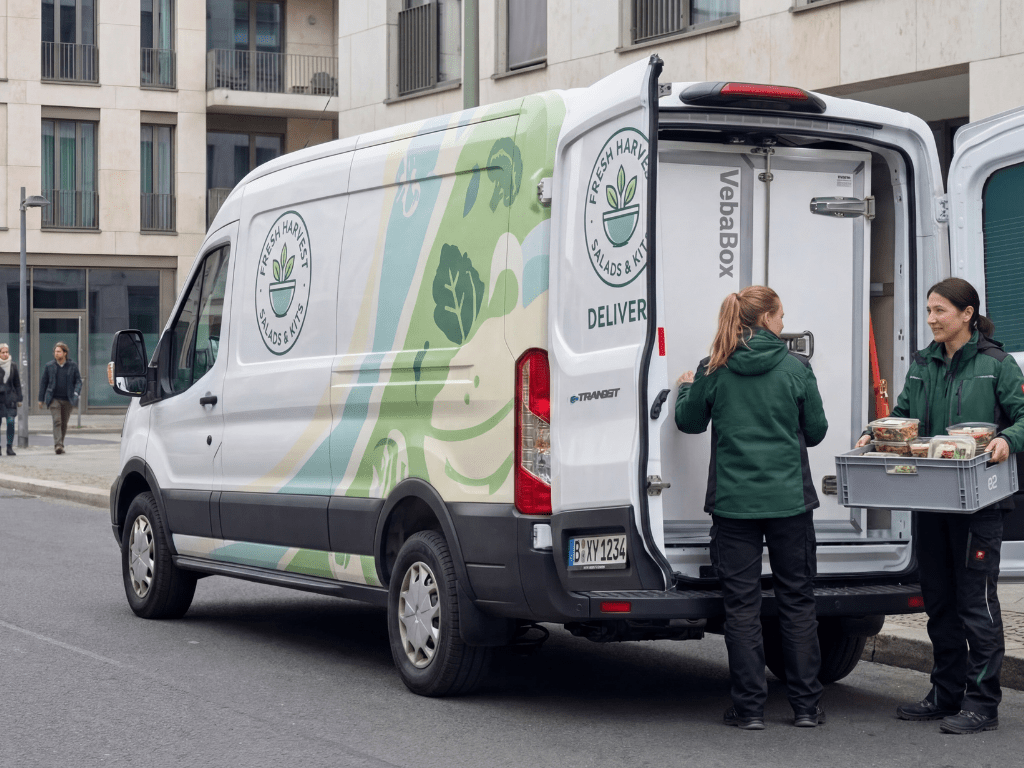
Voedseltransport zonder koelwagen: wat zijn je opties?
De juiste opzet hangt af van het voedsel, de vereiste temperatuur, de route, het handlingproces en het voertuig. Zo beoordeel je dat.
Read more Hoe kies je tussen actieve en passieve koeling voor temperatuurgecontroleerd transport
De keuze tussen actieve en passieve koeling begint met een praktische vraag. Wat moet je lading tijdens de daadwerkelijke rit binnen het bereik houden?
Read more