
The three problems traditional refrigeration creates
Transporting perishable goods forces a choice that most logistics operations would rather avoid: either commit to an expensive refrigerated vehicle that sits idle when demand drops, or risk product integrity with inadequate cooling. The problem deepens when you consider how most delivery routes actually work. Last-mile delivery typically combines products with different temperature requirements: frozen goods, chilled items, and ambient dry goods, all heading to different stops on the same route. A vehicle permanently converted to full refrigeration wastes capacity on the dry goods portion of the load, limiting the number of stops possible and reducing revenue per route.
Traditional refrigerated vehicles also lock a business into a single configuration. Seasonal demand shifts, the introduction of new product lines, or a transition to electric vehicles all become more complicated when your temperature control is built into the vehicle itself rather than being a flexible, removable system.
How modular refrigeration changes the calculation
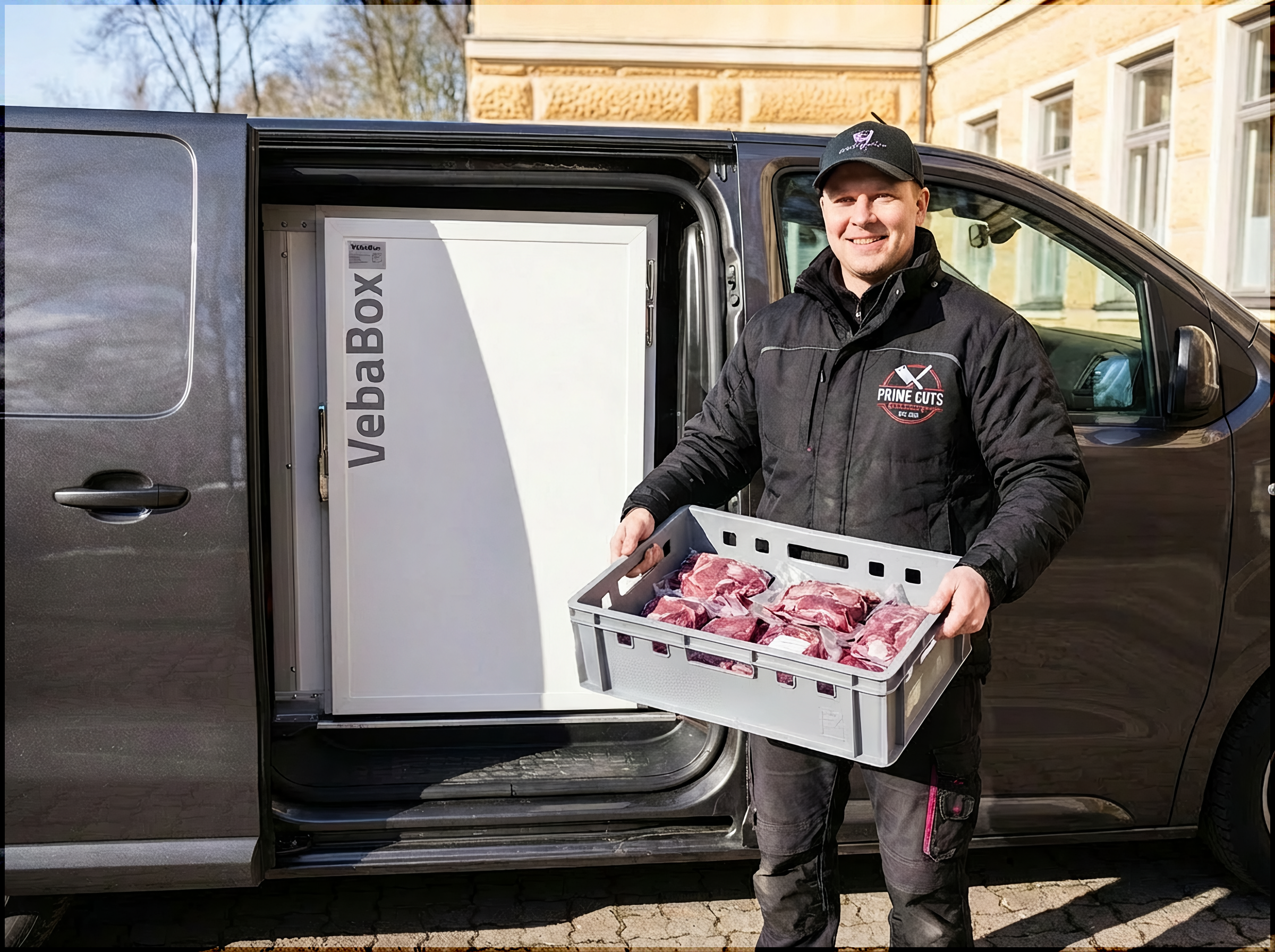
Modular refrigeration solves these problems by separating temperature control from the vehicle. Instead of converting the entire cargo space, a mobile container provides precise temperature management for only the portion of the load that needs it, while the rest of the vehicle carries dry goods as usual. This simple shift makes efficient use of the full cargo space and increases the number of stops possible on a single route.
The mechanism matters here. VebaBox Active uses active refrigeration technology to deliver cooling, freezing, or heating as required, but with thin-wall construction that allows it to sit alongside dry goods in the same vehicle. Install it in minutes, remove it when the route changes, and the vehicle returns to standard cargo work. There is no permanent conversion, no loss of vehicle flexibility, and no need to replace existing fleet vehicles to maintain cold chain integrity.
For last-mile delivery where installation time and energy use matter most, VebaBox Passive provides power-free temperature control through high performance insulation and cooling plate (PCM) technology. Perishables stay at the correct temperature from warehouse to doorstep without any vehicle modification, without drawing power from the vehicle, and without adding operational complexity.
What this means for mixed-temperature routes
The real advantage becomes clear when you look at a typical delivery route. A supermarket delivery might include frozen vegetables, chilled dairy, and ambient packaged goods. A catering supplier might carry frozen proteins, fresh produce, and dry ingredients. In both cases, dedicating the entire vehicle to refrigeration means wasting space and limiting revenue potential.
With modular refrigeration, the frozen items go in one container, chilled goods in another if needed, and dry goods occupy the remaining space. The vehicle makes more stops, carries more revenue per trip, and adapts when the product mix changes from one day to the next. When demand shifts, whether seasonally, due to new contracts, or because of product line changes, the containers move between vehicles rather than requiring a capital investment in new refrigerated trucks.
Adapting to fleet transitions and changing demand
Businesses replacing diesel vehicles with electric alternatives face a particular version of the flexibility problem. A permanently converted refrigerated vehicle cannot easily shift between fuel types, and the cost of running refrigeration affects electric vehicle range. Modular containers decouple the refrigeration investment from the vehicle investment, so a fleet transition does not require replacing the entire temperature-controlled infrastructure at once.
The same principle applies to seasonal demand. A business that needs extra refrigerated capacity for three months does not benefit from owning dedicated vehicles that sit unused for the rest of the year. Modular containers scale up and down with demand, moving between vehicles as routes require, without the fixed costs of a permanently converted fleet.
Keeping temperature consistent from warehouse to doorstep
Both active and passive mobile refrigeration solve the same underlying problem: maintaining consistent temperature throughout the journey while adapting to how a business actually operates. The cold chain does not break because a vehicle needs to carry mixed loads or because demand changes from week to week. Product integrity stays intact, waste decreases, and the business keeps the flexibility to respond to whatever the next contract or season requires.
The containers are modular, removable and can move between vehicles as the route or the fleet changes, without a new vehicle purchase behind each change.
You might also be interested in
Carrying multi-temperature goods on one route
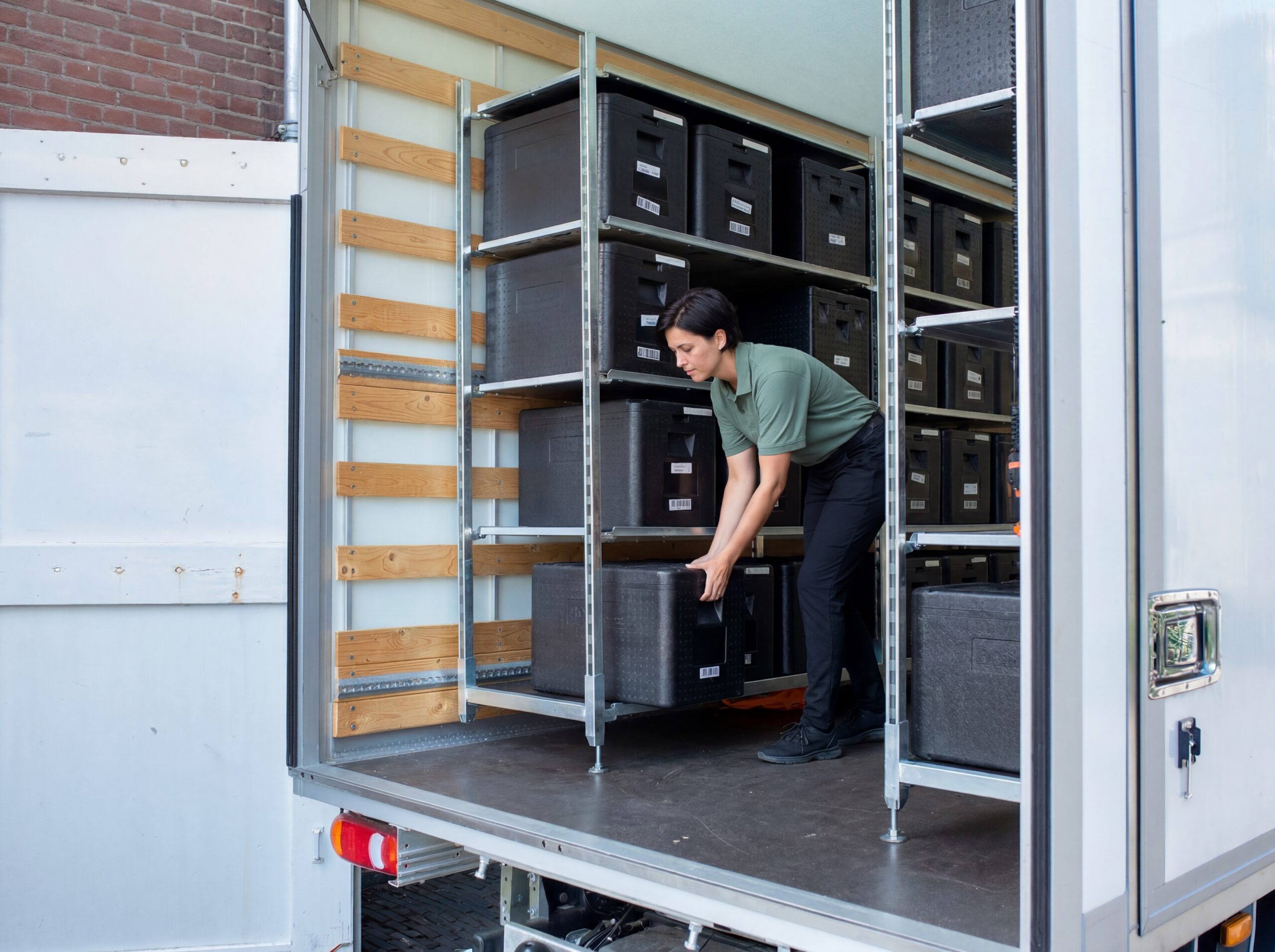
How can a delivery vehicle carry chilled, frozen and ambient products on the same route? A delivery vehicle can carry chilled, frozen and ambient products on the same route by using separate temperature-controlled compartments or boxes. This approach creates independent thermal conditions around each product group, allowing different temperature zones to coexist in a single vehicle without requiring the entire load space to operate at one fixed temperature.
Read more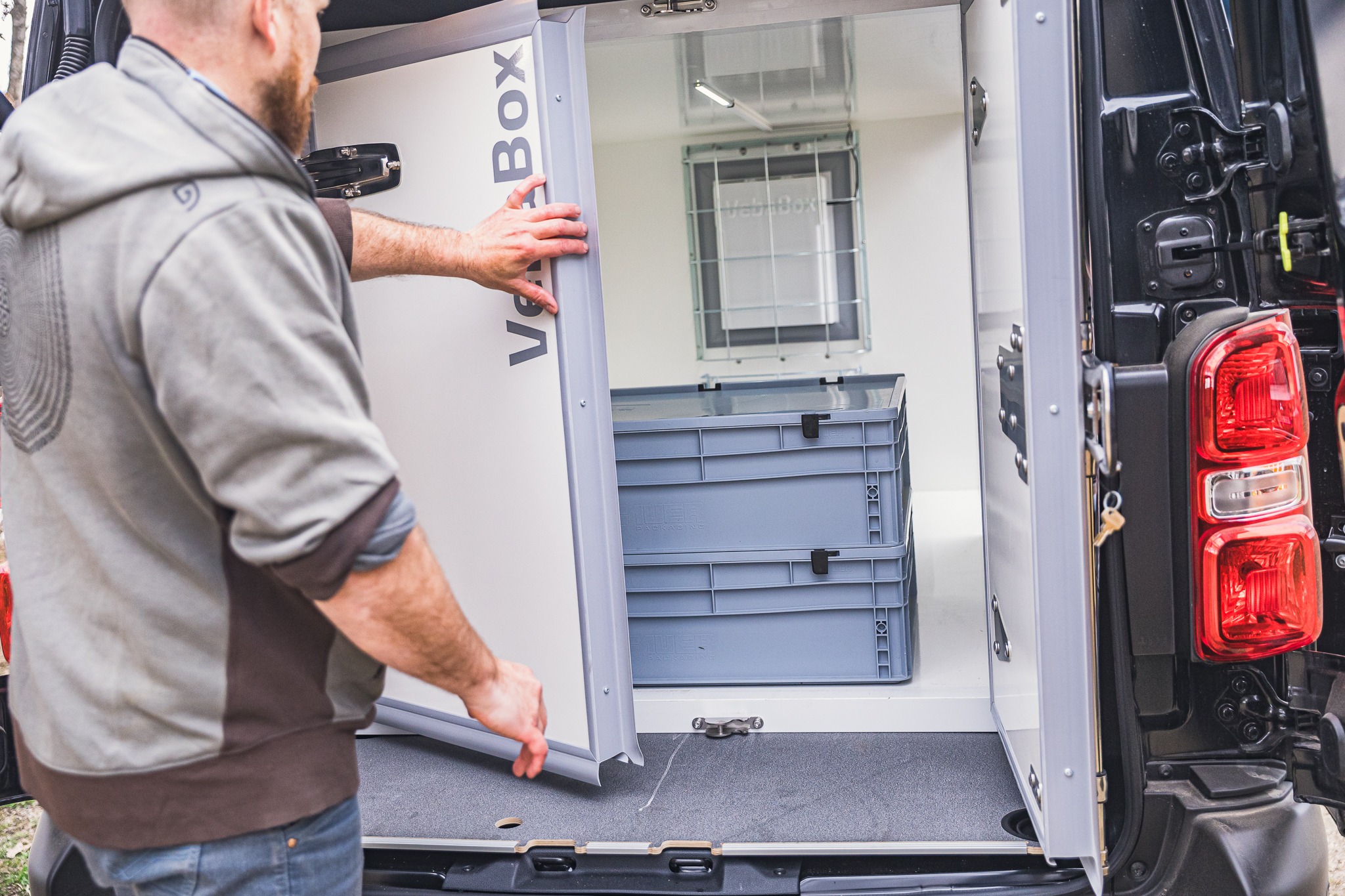
The alternative to the refrigerated van
What is the best alternative to a refrigerated van for local food and beverage deliveries? The best alternative to a refrigerated van for local food and beverage deliveries is a removable temperature-controlled box system that conditions the cargo space itself rather than the entire vehicle. Active systems with powered refrigeration suit recurring routes with frequent door openings and multiple stops, while passive systems using insulation and and cooling plates work well for shorter journeys and smaller consignments. Both allow a standard van or car to carry chilled or frozen products on one round and other goods on the next, eliminating the need for dedicated refrigerated vehicles when volumes and product types vary.
Read more
Add transport capacity without converting a vehicle
How can laboratories add temperature-controlled transport capacity without converting an entire vehicle? Laboratories can install removable, cargo-focused temperature-control systems in conventional vans or other suitable vehicles. Rather than conditioning the entire load space, these systems control the smaller environment immediately around the samples, allowing standard fleet vehicles to transport temperature-sensitive material without permanent refrigeration conversion.
Read more