
 Nederlands
 Start with the temperature requirement
A powered system may suit repeated delivery rounds, while a passive configuration may work better across handovers where power is unavailable. The right choice depends on the complete transport process, not the vehicle alone.
Define the approved product temperature range before comparing equipment. “Chilled” is not precise enough. Record the lower and upper limits, the permitted transport duration and the consequences of an excursion.
Also establish whether the system must cool the product or only maintain its temperature. Passive cooling is designed for pre-conditioned goods and uses insulation, conditioned thermal elements and a controlled loading process to maintain a defined range. Active cooling uses power to condition the cargo space during transport. Depending on the configuration, that may include cooling, freezing or heating.
The product must enter either system at the correct temperature unless the selected configuration has been tested for a defined pull-down requirement. Transport equipment should not be expected to correct an uncontrolled loading process.
Map the route beyond driving time
A four-hour route can require more than four hours of temperature control. Include preparation, waiting, loading, unloading and handovers when calculating the required duration.
Map these parts of the journey:
- Time between packing and vehicle departure
- Driving time, including expected delays
- Number and duration of door openings
- Unpowered periods during handovers or temporary storage
- Time before the recipient places the cargo in controlled storage
- Return transport for rejected goods or reusable equipment
Ambient conditions also matter. A configuration used during a mild spring route does not automatically have the same performance in summer heat or winter cold. Direct sunlight, overnight parking and loading-bay exposure can change the thermal load.
Choose active cooling when conditions keep changing
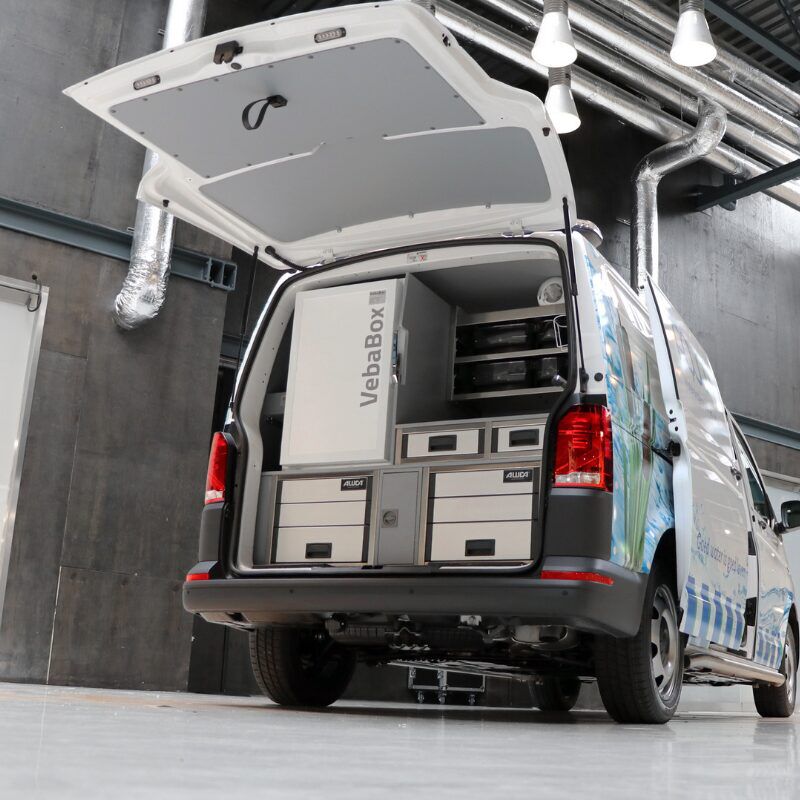
Active cooling is usually the stronger choice when the system must respond to changing conditions during transport. VebaBox Active connects to a vehicle’s 12V or 230V power supply and conditions the cargo space rather than the whole vehicle.
- Consider active cooling in the following situations:
- Routes involve frequent door openings
- Journey duration varies substantially
- The cargo space must recover after warm air enters
- Operations require cooling, freezing or heating
- Vehicles complete repeated delivery rounds
- Power remains available during the temperature-controlled stage
A removable active system can add refrigerated capacity without permanent vehicle conversion. The same vehicle remains available for other work after removal, subject to the installation and operating plan.
Power demand must be checked against the vehicle and route. For an electric commercial vehicle, use measured consumption from the proposed configuration to calculate the effect on driving range. A generic energy estimate is not enough because box size, setpoint, ambient temperature and door-opening frequency affect consumption.
Choose passive cooling when control must travel with the cargo
Passive cooling uses insulation and conditioned thermal elements. It needs no connection to the vehicle or an external power supply during use. Temperature control can therefore continue when the box moves between vehicles, passes through a handover or waits in temporary storage.
Consider passive cooling in the following situations:
- No dependable power source is available
- The shipment moves through several transport modes
- Temperature control must continue outside the vehicle
- Shipment duration and handling steps are predictable
- Door openings are limited or controlled
- The operation can pre-condition thermal elements and cargo correctly
Passive cooling requires more than placing frozen packs beside a product and closing the lid. The thermal elements, their conditioning temperature, their position and the payload arrangement form one configuration. Changing any of them can alter performance.
A passive solution should have validated hold time for the required temperature range, payload, ambient profile and loading pattern. We do not recommend selecting it from insulation thickness or a general duration claim.
Validate the complete process before deployment
Equipment selection is only one part of temperature-controlled transport. Loading practices, staff instructions, vehicle power, route planning and handovers determine whether the selected configuration performs as intended.
We recommend a staged validation process. First, define the worst credible operating case. Then test the proposed configuration with representative cargo, calibrated temperature loggers and realistic door openings. Review the temperature at several points in the load rather than measuring only near the cooling source. Document pre-conditioning, loading and handover procedures before a fleet rollout.
A successful trial should answer specific questions. Did every monitored point remain within range, and how long did recovery take after openings? Record what happened during an unpowered delay and whether the vehicle supplied enough power throughout the route.
The best temperature-controlled transport solution is the configuration that has evidence for your cargo, route and operating process. Ask VebaBox to assess your transport profile and define an active, passive or hybrid configuration for validation.
You might also be interested in
Hoe kies je tussen actieve en passieve koeling voor temperatuurgecontroleerd transport
De keuze tussen actieve en passieve koeling begint met een praktische vraag. Wat moet je lading tijdens de daadwerkelijke rit binnen het bereik houden?
Read more
De cold chain opnieuw bekeken
Je cold chain controleert mogelijk meer ruimte dan de lading vereist. Dat kan betekenen dat je betaalt voor toegewijde gekoelde voertuigen terwijl slechts een deel van de lading een bepaald temperatuurbereik nodig heeft. Een beter ontwerp begint bij het product, de route en het verwerkingsproces. De vraag is niet of elk voertuig koeling nodig heeft. Het gaat erom waar temperatuurcontrole moet gelden, hoe lang en onder welke omstandigheden.
Read more Rethinking the cold chain
Your cold chain may be controlling more space than the cargo requires. That can leave you paying for dedicated refrigerated vehicles when only part of a load needs a defined temperature range. A better design starts with the product, route and handling process. The question is not whether every vehicle needs refrigeration. It is where temperature control must apply, for how long and under which conditions.
Read more