
What makes a passive container suitable for pharmaceutical transport?
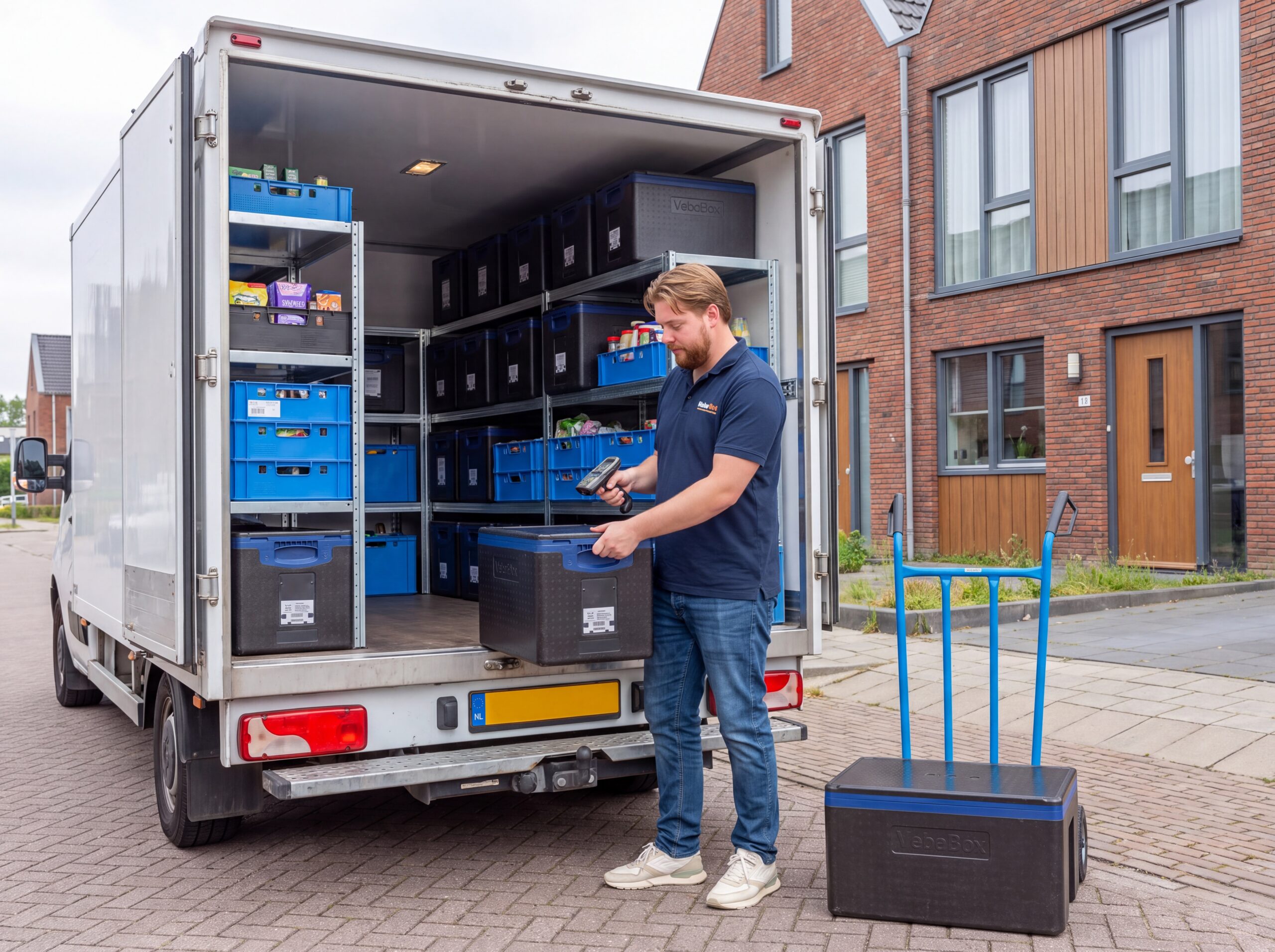
A passive container uses insulation and preconditioned cooling elements to maintain cargo that is already at its required transport temperature. It draws no power during transport.
For pharmaceutical use, look for five things:
- Validation for the actual application. The evidence should cover the required temperature range, expected transport time, ambient conditions, payload and packing arrangement. A broad product claim cannot replace configuration-specific data.
- A defined preparation process. Cooling elements must be conditioned correctly, and staff need clear packing instructions. Preparation errors can undermine an otherwise capable container.
- Protection during the complete route. Include loading, vehicle time, handovers, waiting periods and unloading. The planned duration should also leave a justified safety margin for delays.
- Temperature monitoring and traceability. The container and process should support your monitoring plan, deviation procedure and GDP documentation requirements.
- A practical reusable design. Check cleaning, inspection, storage and replacement procedures. Procurement cost matters, but so do conditioning capacity, staff time and the number of boxes needed to maintain daily operations.
Validation must match your route
There is no meaningful “best container” without a defined transport profile. A short pharmacy route carrying a small chilled load has different requirements from a larger shipment with several handovers and long exposure to summer conditions.
Before selecting a container, document:
- the medicine and approved transport range
- the payload dimensions and mass
- the required duration, including likely delays
- minimum and maximum ambient exposure
- loading and unloading conditions
- the number and length of handovers
- available equipment for conditioning thermal plates
- the required temperature logger and data review process
Ask the supplier for test data that reflects these conditions. Confirm where temperature sensors were placed, how the payload was prepared and whether the stated duration applies to the exact configuration you plan to use. If the route changes, assess whether the validation still applies.
How VebaBox Passive works without power
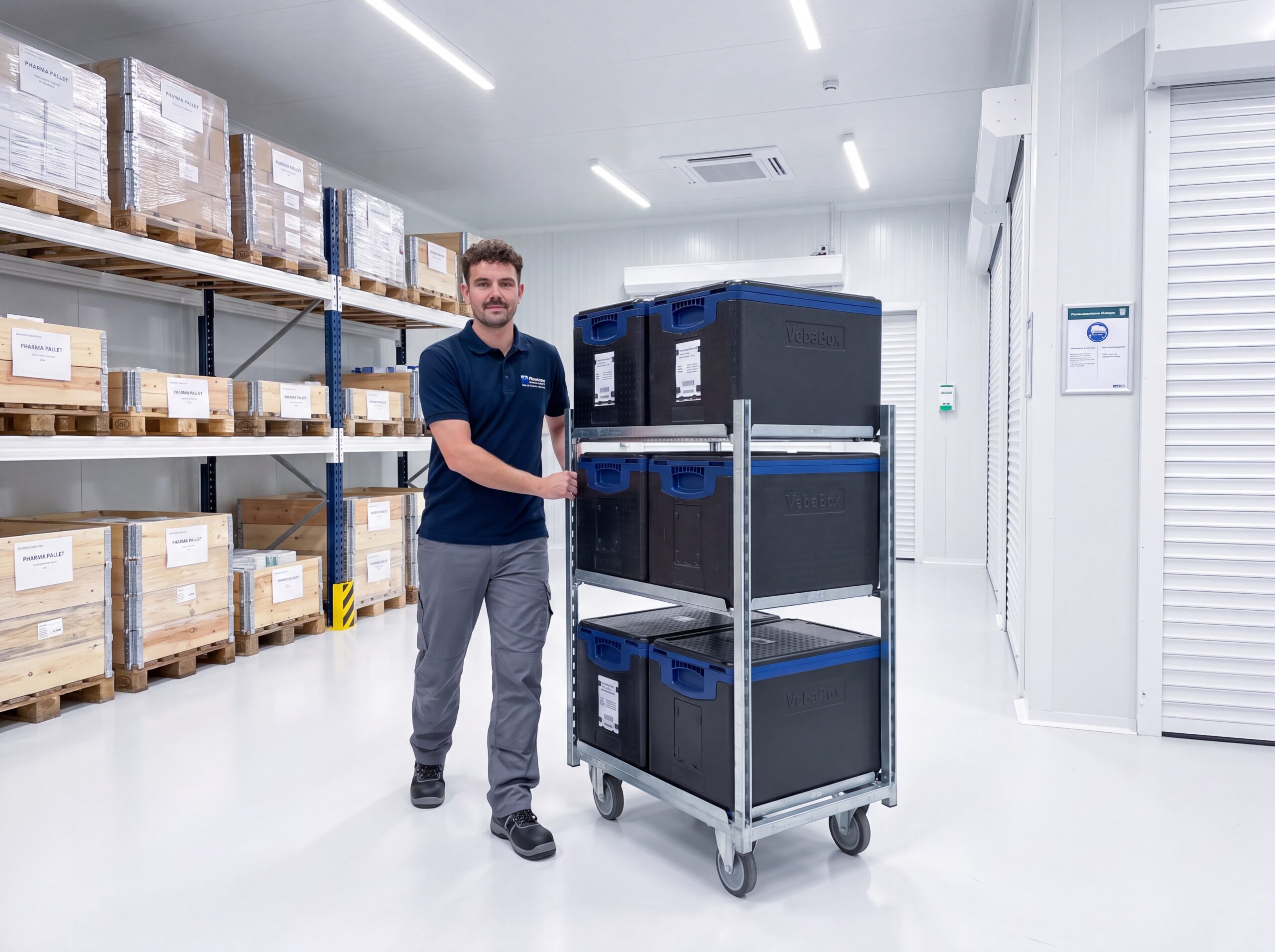
VebaBox Passive combines a high performance insulated body with a cooling element (PCM) in the lid. The element is conditioned before use for the selected temperature application. Once packed, the system maintains goods that have already reached their required transport temperature.
It needs no vehicle power or external power connection during transport.
The duration is not one fixed figure for every shipment. It depends on the selected cooling plate range, conditioning method, payload, ambient profile and handling process. We assess those factors before defining and validating a configuration.
Because the container is removable, you can place temperature-controlled capacity in an existing vehicle without permanent vehicle conversion. You can also move the box between suitable vehicles, which helps preserve fleet availability when routes or vehicle assignments change.
Compare the complete operating process
A purchasing decision based only on box price can move costs elsewhere. Compare the complete process over the expected service life:
- qualification and route validation
- cooling plate conditioning equipment and available preparation time
- cleaning, inspection and maintenance
- temperature monitoring and record retention
- container rotation and storage
- replacement parts and supplier support
- compatibility with current and planned vehicles
The best passive cold chain container is the one your team can prepare consistently, monitor clearly and defend during an audit. The final choice rests on your medicine, temperature range, route and validated process.
Ask VebaBox to assess your pharmaceutical trnasport profile and define a suitable passive configuration.
You might also be interested in
Voedseltransport zonder koelwagen: wat zijn je opties?
De juiste opzet hangt af van het voedsel, de vereiste temperatuur, de route, het handlingproces en het voertuig. Zo beoordeel je dat.
Read more Food delivery without a refrigerated van: What are your options?
The right setup depends on the food, required temperature range, route, handling process and vehicle. Here is how to assess it.
Read more
Hoe kies je tussen actieve en passieve koeling voor temperatuurgecontroleerd transport
De keuze tussen actieve en passieve koeling begint met een praktische vraag. Wat moet je lading tijdens de daadwerkelijke rit binnen het bereik houden?
Read more