
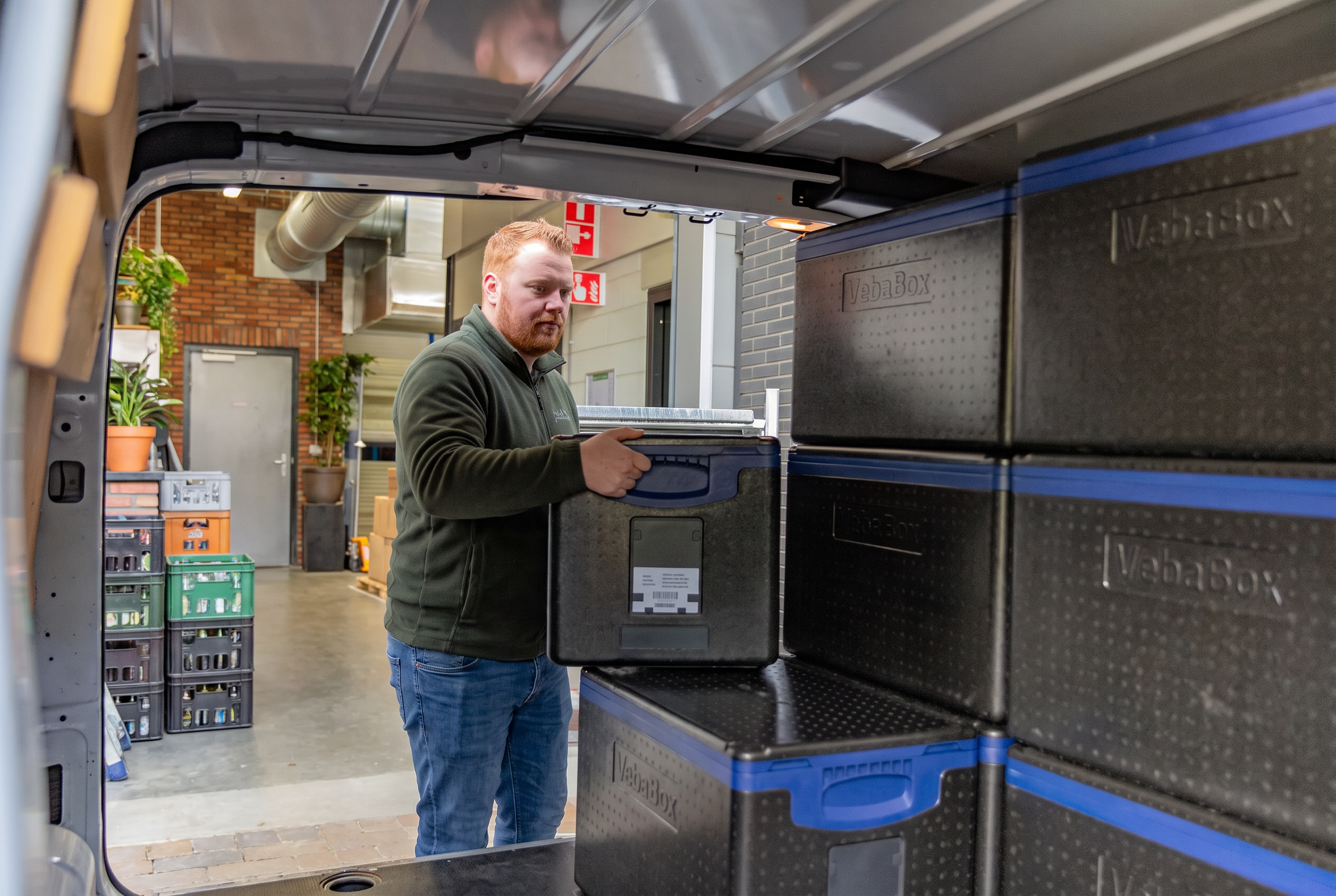
The best modular refrigerated container for supermarket delivery is one that stabilizes temperature quickly after each door opening, maintains cooling independently of the vehicle engine, and installs without permanent modification to the vehicle. VebaBox Active is designed specifically for these multi-drop, high-frequency stop conditions.
Why supermarket delivery demands a modular approach
Supermarket delivery routes create unique cold chain challenges. Each stop means opening doors, exposing products to ambient air, and waiting for temperature recovery before the next delivery. In urban areas, where stops occur more frequently than on rural routes, traditional refrigerated vans struggle to maintain consistent temperature between deliveries. The cooling system depends on the engine running, so every stationary moment risks temperature drift.
A modular refrigerated container addresses this by operating independently. The unit continues cooling even when the vehicle is parked and the engine is off, which matters during loading, unloading, and the short gaps between closely spaced urban drops.
How modular systems handle mixed-temperature loads
Supermarket orders often combine chilled and frozen items. A modular system with precise temperature control can handle cooling, freezing, or even heating modes within the same vehicle. This removes the need to run separate vehicles for different temperature bands, improving route efficiency without compromising product integrity.
Because the container installs into any standard commercial vehicle without permanent modification, fleet managers can redeploy units as demand shifts. A vehicle that carries frozen goods one week can switch to chilled distribution the next, simply by moving the modular unit. This flexibility avoids the cost and downtime of converting vehicle bodies.
What to look for in a modular refrigerated container
When specifying a system for supermarket delivery, focus on these operational factors:
Temperature precision and range – The unit should offer accurate control across cooling, freezing, and heating, accommodating the mixed loads typical of grocery distribution.
Fast installation – A system that mounts quickly without structural changes to the vehicle keeps fleet downtime low and preserves the vehicle’s residual value.
Temperature recovery speed – After each door opening, the system must return to set point rapidly to maintain cold chain integrity across multiple stops.
Engine-independent operation – Cooling should continue when the vehicle is stationary, protecting products during loading, unloading, and between stops.
Redeployment capability – The container should transfer easily between vehicles, allowing the fleet to respond to changing delivery volumes or vehicle maintenance schedules without losing refrigerated capacity.
Why modular wins for multi-drop routes
Traditional refrigerated vans lock the cooling system into a single vehicle. When that vehicle needs servicing or when delivery patterns change, capacity is lost. Modular systems decouple refrigeration from the vehicle, so cooling capacity moves where it’s needed.
For supermarket delivery, where route efficiency and product integrity both matter, this approach avoids the high capital cost of purpose-built refrigerated vehicles while maintaining consistent cold chain performance across every stop on the route.
VebaBox Active is built for exactly this type of operation: precise, independent, and flexible enough to keep pace with the demands of modern grocery distribution.
You might also be interested in
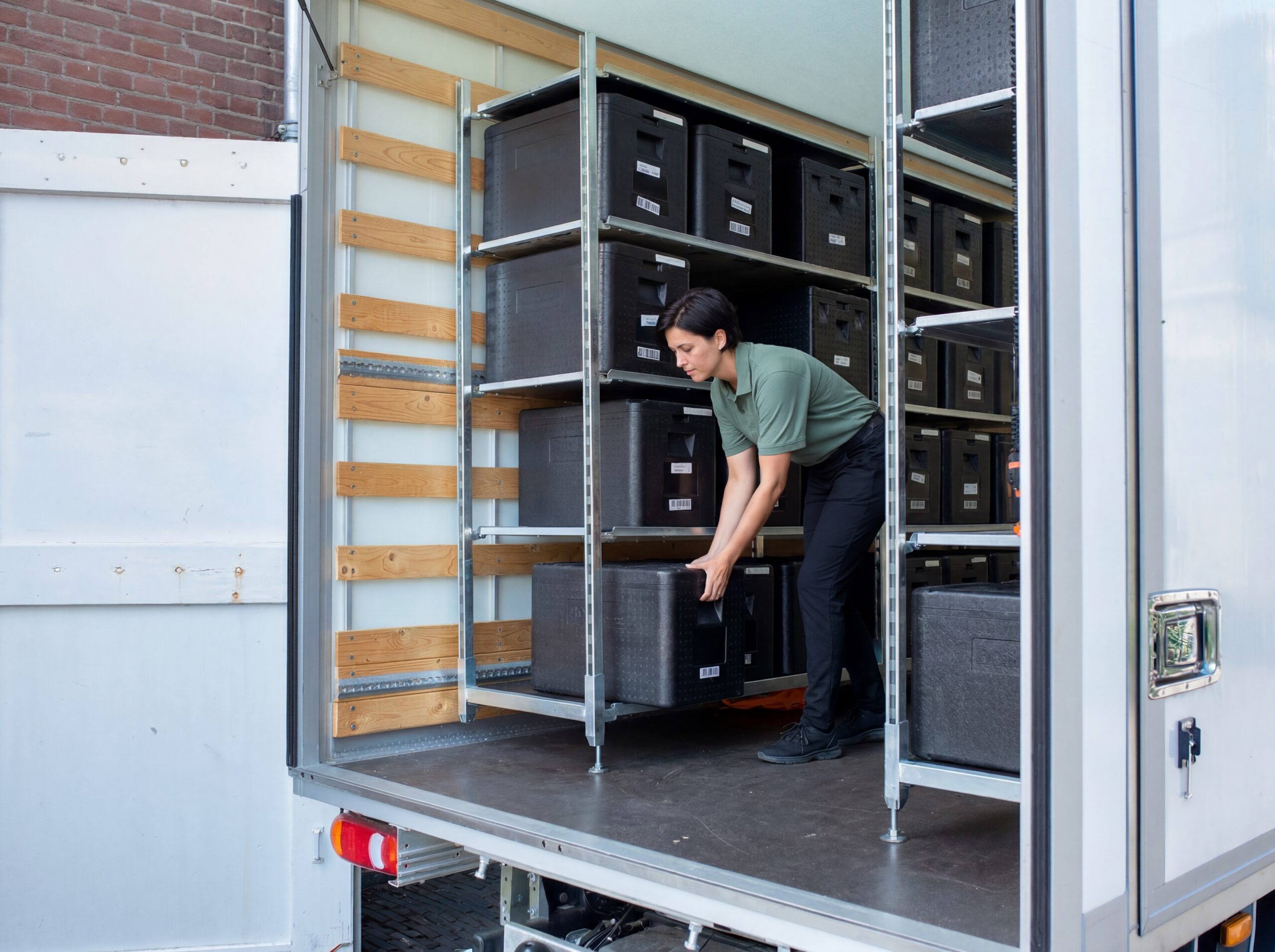
Carrying multi-temperature goods on one route
How can a delivery vehicle carry chilled, frozen and ambient products on the same route? A delivery vehicle can carry chilled, frozen and ambient products on the same route by using separate temperature-controlled compartments or boxes. This approach creates independent thermal conditions around each product group, allowing different temperature zones to coexist in a single vehicle without requiring the entire load space to operate at one fixed temperature.
Read more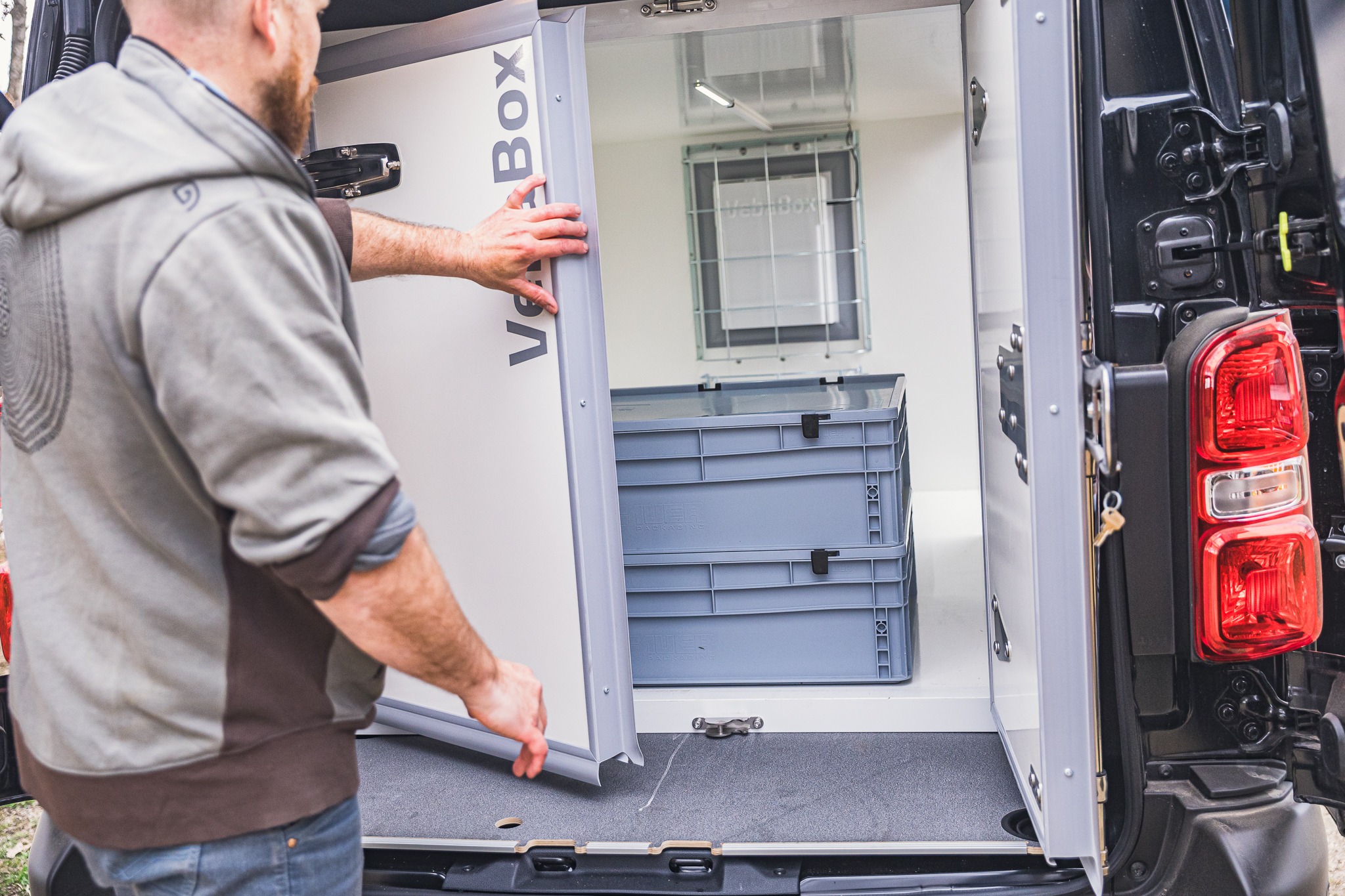
The alternative to the refrigerated van
What is the best alternative to a refrigerated van for local food and beverage deliveries? The best alternative to a refrigerated van for local food and beverage deliveries is a removable temperature-controlled box system that conditions the cargo space itself rather than the entire vehicle. Active systems with powered refrigeration suit recurring routes with frequent door openings and multiple stops, while passive systems using insulation and and cooling plates work well for shorter journeys and smaller consignments. Both allow a standard van or car to carry chilled or frozen products on one round and other goods on the next, eliminating the need for dedicated refrigerated vehicles when volumes and product types vary.
Read more
Add transport capacity without converting a vehicle
How can laboratories add temperature-controlled transport capacity without converting an entire vehicle? Laboratories can install removable, cargo-focused temperature-control systems in conventional vans or other suitable vehicles. Rather than conditioning the entire load space, these systems control the smaller environment immediately around the samples, allowing standard fleet vehicles to transport temperature-sensitive material without permanent refrigeration conversion.
Read more