
Why a holding time figure does not tell the whole story
Most passive container specifications cite a holding time: the duration a fully loaded, sealed container maintains temperature in controlled test conditions. That number matters, but it describes a scenario that rarely matches a multi-stop route. A container opened once at the end of a journey behaves very differently from one opened five times as it empties across a city.
Every time a container is opened, warm air enters. The remaining load is exposed. The thermal mass changes as the container empties. If your route involves six drops over four hours, the performance you need is not the same as a single point-to-point delivery, even if the elapsed time is identical.
What actually determines performance on a multi-stop route
-
Opening pattern and frequency
Each time a container is opened, the interior temperature rises. How much depends on how long the door stays open, the ambient temperature, and how much of the load is exposed. A container opened briefly at each stop behaves differently from one left open while a driver sorts parcels. The mechanism: every opening introduces a heat load that the cooling plate must absorb, and that capacity is finite.
-
Load size and how it changes
A full container has more thermal mass than a half-empty one. As you unload orders, the remaining goods are surrounded by more air space, the insulation has less mass to protect, and temperature stability changes. Containers perform differently when 80% full compared to 20% full, even if the cooling plate is still active.
-
How deliveries are organised
The way you structure your route changes which container design works best. If you assign separate containers to individual drops, one box per customer, for example, later deliveries remain sealed while you unload earlier orders. The boxes destined for stops four, five and six stay closed, preserving their temperature, while stops one through three are opened and emptied.
If instead you load all orders into one larger container and open it at every stop, that container must maintain temperature despite repeated access and a steadily diminishing load. These are different thermal challenges, and the right container choice reflects that difference.
-
Delays and real-world variability
Planned routes encounter traffic. Deliveries take longer than scheduled. A container that works perfectly on a route completed in three hours may not hold temperature if a delay stretches that to five. The container’s performance must account for variability, not just the ideal timeline.
How VebaBox Passive fits multi-stop routes
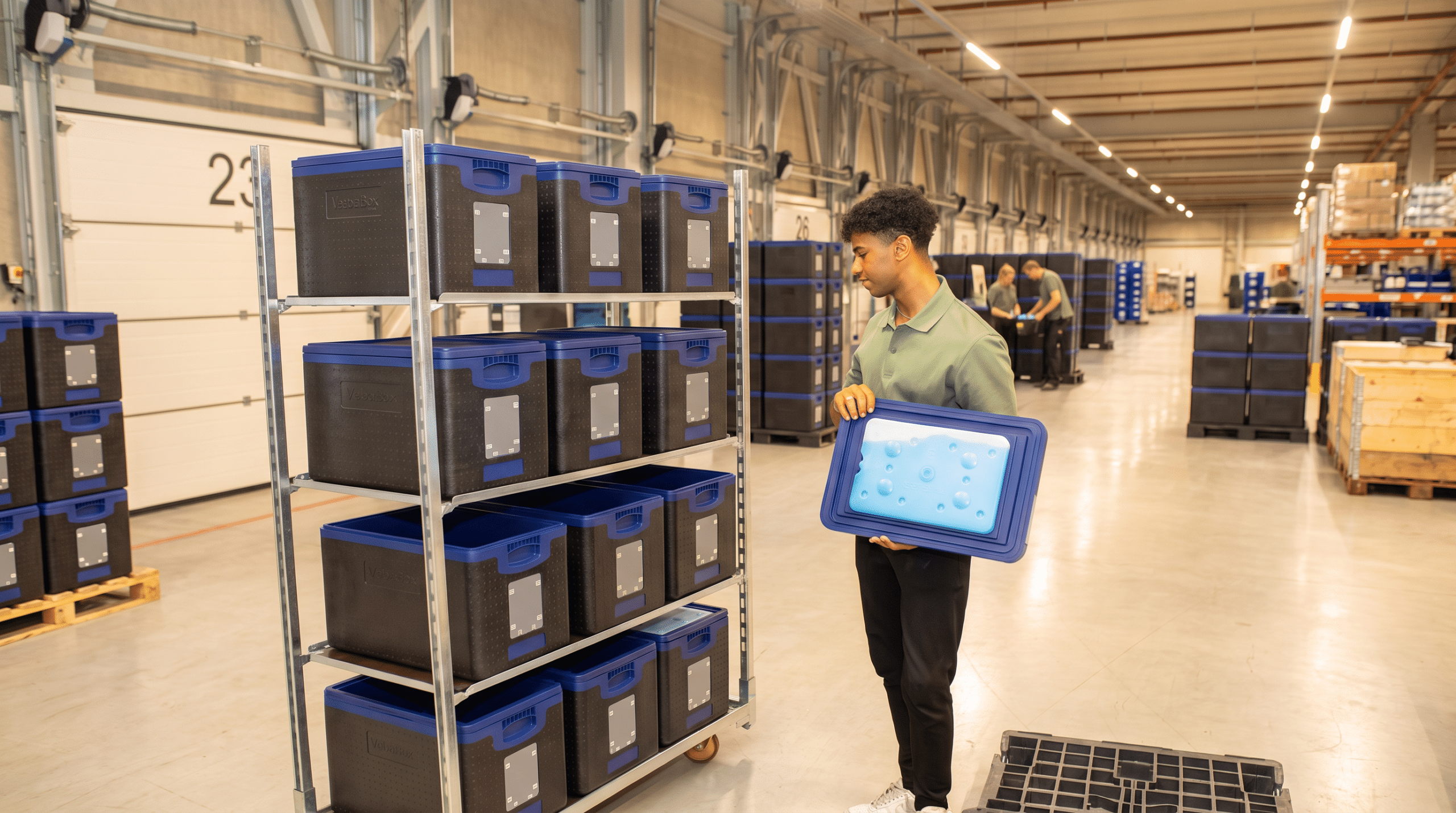
VebaBox Passive containers provide removable temperature-controlled spaces that need no power during transport. They rely on high performance insulation (EPP & VIP) and cooling plates (PCM) to maintain temperature. Their suitability for a multi-stop route depends on selecting and preparing the right configuration for the goods being carried and the conditions the route actually involves.
That configuration includes the type of cooling plate, how it is conditioned before loading, the size of the container relative to the load, and how the delivery sequence is planned. A VebaBox configured for a route with frequent short stops is set up differently from one prepared for fewer, longer intervals between access.
Start with the delivery process
The starting point for choosing a passive refrigerated container is the complete delivery process, from conditioning the cooling plate to unloading the final order. Map the route: how many stops, how long at each, how much is unloaded, what the ambient temperature is, and what delays are possible. Then evaluate how a container will perform against that specific pattern.
Questions to answer before selecting a container:
- How many times will the container be opened during the route?
- How long will it stay open at each stop?
- How much of the load is removed at each delivery?
- Will separate containers for individual drops improve performance compared to one shared container?
- What is the longest realistic duration from loading to final delivery, including delays?
- How will the cooling plate be conditioned, and what is the margin if preparation is not perfect?
A passive container is a tool. Its performance depends on how it is prepared, loaded, and used across the specific conditions of your operation.
Temperature control as a system
Multi-stop cold chain routes demand containers that maintain temperature through repeated access, changing loads, and real-world variability. Holding time is one input, but the opening pattern, load profile, and delivery organisation determine whether a passive container actually works for your route. The choice should follow from that full process, not a single holding-time figure.
You might also be interested in
Carrying multi-temperature goods on one route
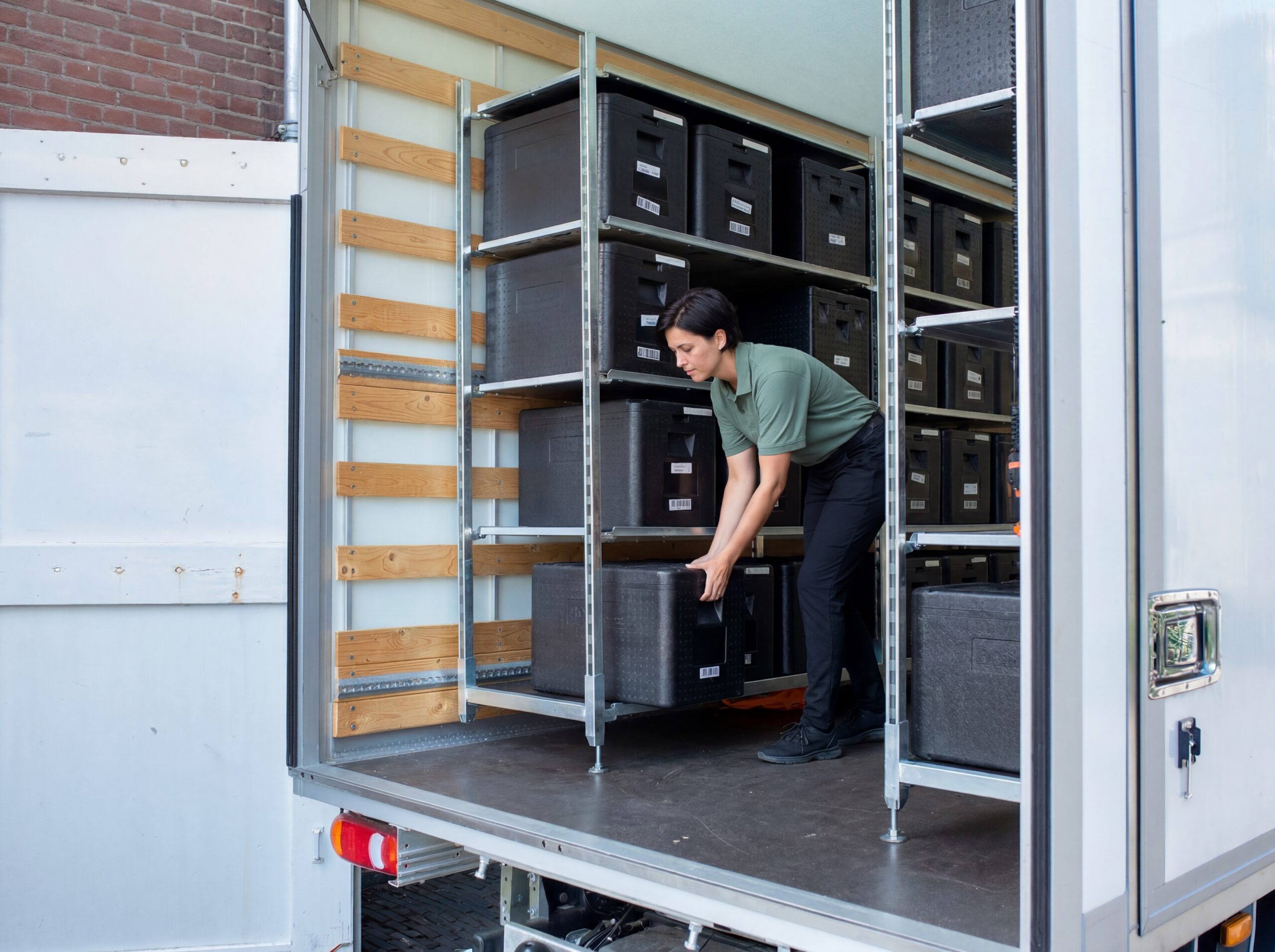
How can a delivery vehicle carry chilled, frozen and ambient products on the same route? A delivery vehicle can carry chilled, frozen and ambient products on the same route by using separate temperature-controlled compartments or boxes. This approach creates independent thermal conditions around each product group, allowing different temperature zones to coexist in a single vehicle without requiring the entire load space to operate at one fixed temperature.
Read more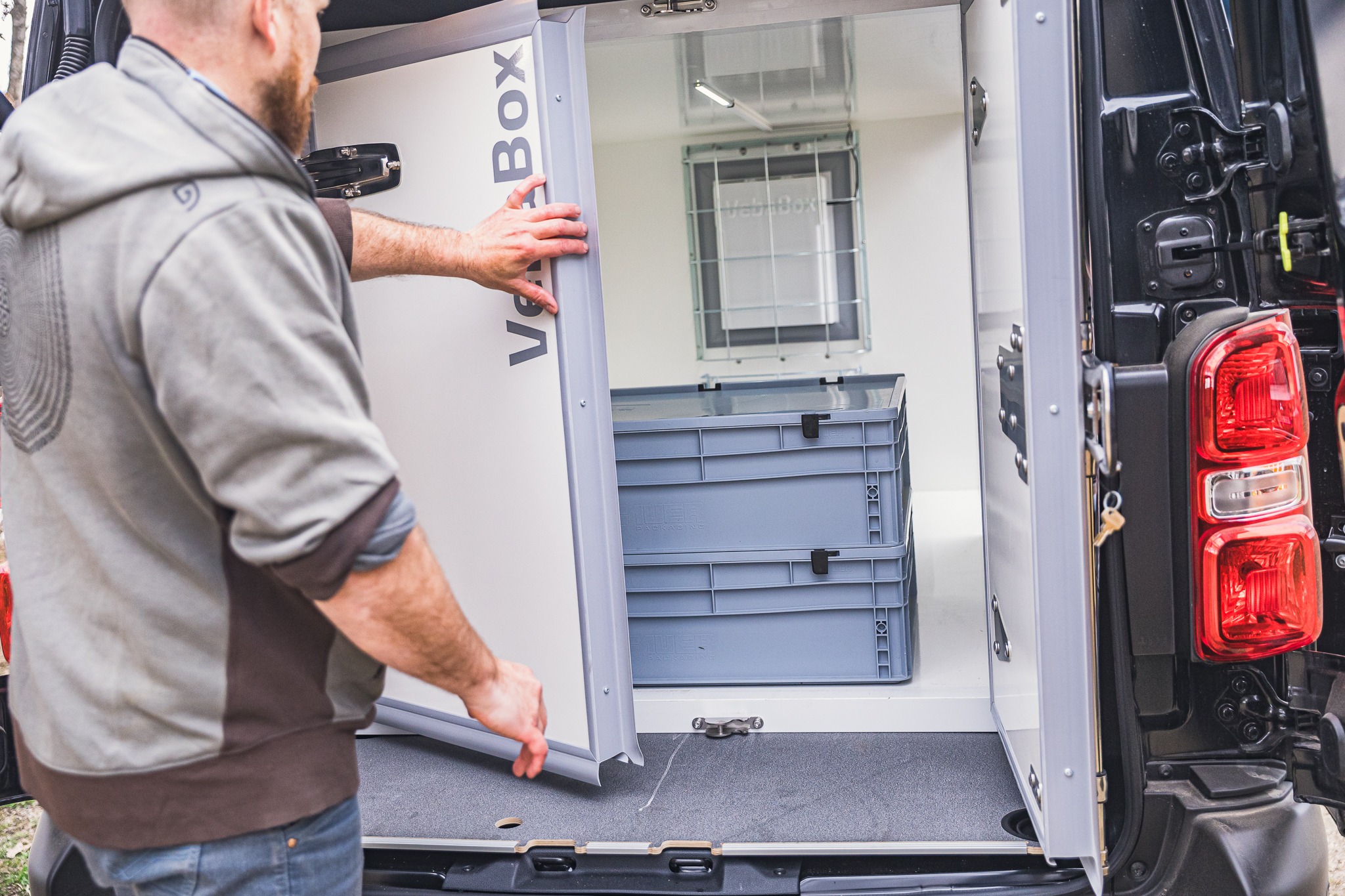
The alternative to the refrigerated van
What is the best alternative to a refrigerated van for local food and beverage deliveries? The best alternative to a refrigerated van for local food and beverage deliveries is a removable temperature-controlled box system that conditions the cargo space itself rather than the entire vehicle. Active systems with powered refrigeration suit recurring routes with frequent door openings and multiple stops, while passive systems using insulation and and cooling plates work well for shorter journeys and smaller consignments. Both allow a standard van or car to carry chilled or frozen products on one round and other goods on the next, eliminating the need for dedicated refrigerated vehicles when volumes and product types vary.
Read more
Add transport capacity without converting a vehicle
How can laboratories add temperature-controlled transport capacity without converting an entire vehicle? Laboratories can install removable, cargo-focused temperature-control systems in conventional vans or other suitable vehicles. Rather than conditioning the entire load space, these systems control the smaller environment immediately around the samples, allowing standard fleet vehicles to transport temperature-sensitive material without permanent refrigeration conversion.
Read more