

Greater flexibility comes from controlling only the space around temperature-sensitive cargo, creating separate zones for mixed loads, using high-performance compact insulation, combining active and passive temperature control, deploying transferable equipment, matching capacity to actual payload, testing before scaling, and reviewing performance data after implementation.
Start with the process, not the equipment
Most cold-chain redesigns fail because they begin with equipment selection rather than process analysis. Map your complete process, from preparation and loading through transport, handovers, temporary storage and final delivery, assessing temperature, duration, payload volume, power and exposure risk at each stage. That mapping reveals where you are over-engineering and where you are exposed.
Eight levers for greater flexibility
Control the cargo space, not the entire vehicle: Controlling only the immediate space around temperature-sensitive cargo reduces energy consumption, speeds temperature recovery when doors open, and separates the transport asset from the temperature control function so you can scale capacity without capital equipment constraints.
Create separate temperature zones for mixed loads: Distinct zones within the cargo space let you carry ambient, chilled and frozen products on the same route, improving vehicle utilisation and letting you take mixed-temperature orders that would previously have required multiple vehicles.
Use minimum wall thickness with high insulation performance: Modern high-performance insulation materials achieve equivalent or better thermal performance in a fraction of traditional thickness, with every centimetre of wall thickness you reduce translating directly into cargo volume.
Combine active and passive temperature control: The most flexible processes use both powered refrigeration and passive solutions, applying each where its strengths match the operational stage: passive control for short last-mile delivery, active systems for longer transport stages.
Deploy transferable solutions not tied to specific vehicles: Transferable temperature control solutions that move between vehicles let you match capacity to daily demand, maintain service continuity when individual vehicles are unavailable, and lower the cost per delivery.
Match capacity to actual payload, not theoretical maximum: Modular capacity that scales to match actual payload volume rather than operating systems designed for maximum theoretical capacity lowers energy use and cost.
Test the redesigned process before full-scale implementation: Test under real conditions with representative routes, seasonal temperature variations, and actual staff, using data loggers to validate temperature maintenance and identify failure points while they are still cheap to fix.
Review performance data and experience after implementation: Systematically collect performance data and operational feedback, tracking temperature excursions, energy consumption, delivery times, and staff observations to determine whether the redesign delivered the expected flexibility and where further refinement is needed.
No single design fits every cold chain
A process carrying frozen food on a multi-stop urban route faces completely different requirements from one transporting diagnostic samples between fixed healthcare facilities. The most effective cold-chain redesigns combine temperature performance with daily operational realities, built on a clear understanding of where temperature control is genuinely required and what trade-offs make sense for your specific business model.
You might also be interested in
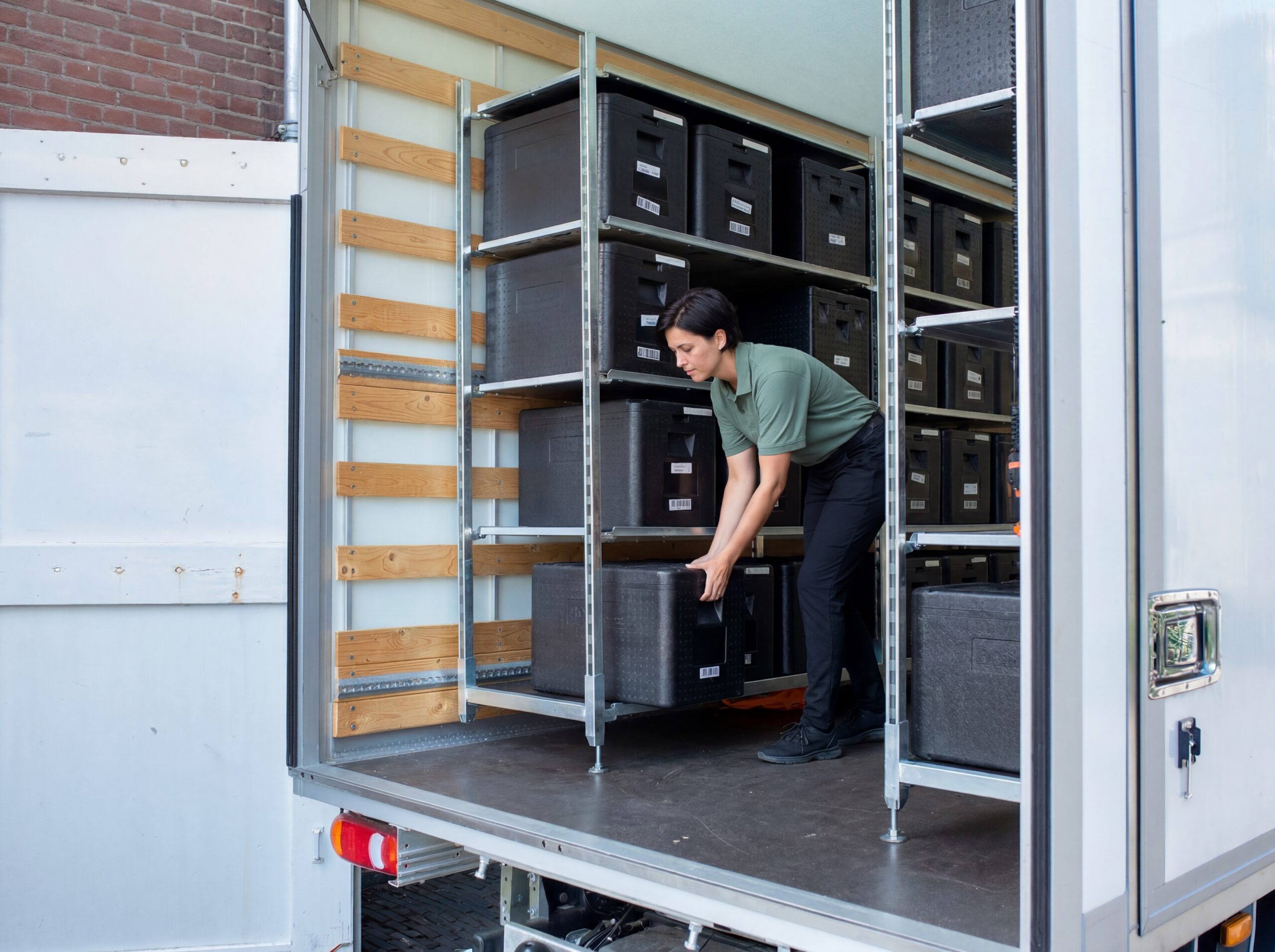
Carrying multi-temperature goods on one route
How can a delivery vehicle carry chilled, frozen and ambient products on the same route? A delivery vehicle can carry chilled, frozen and ambient products on the same route by using separate temperature-controlled compartments or boxes. This approach creates independent thermal conditions around each product group, allowing different temperature zones to coexist in a single vehicle without requiring the entire load space to operate at one fixed temperature.
Read more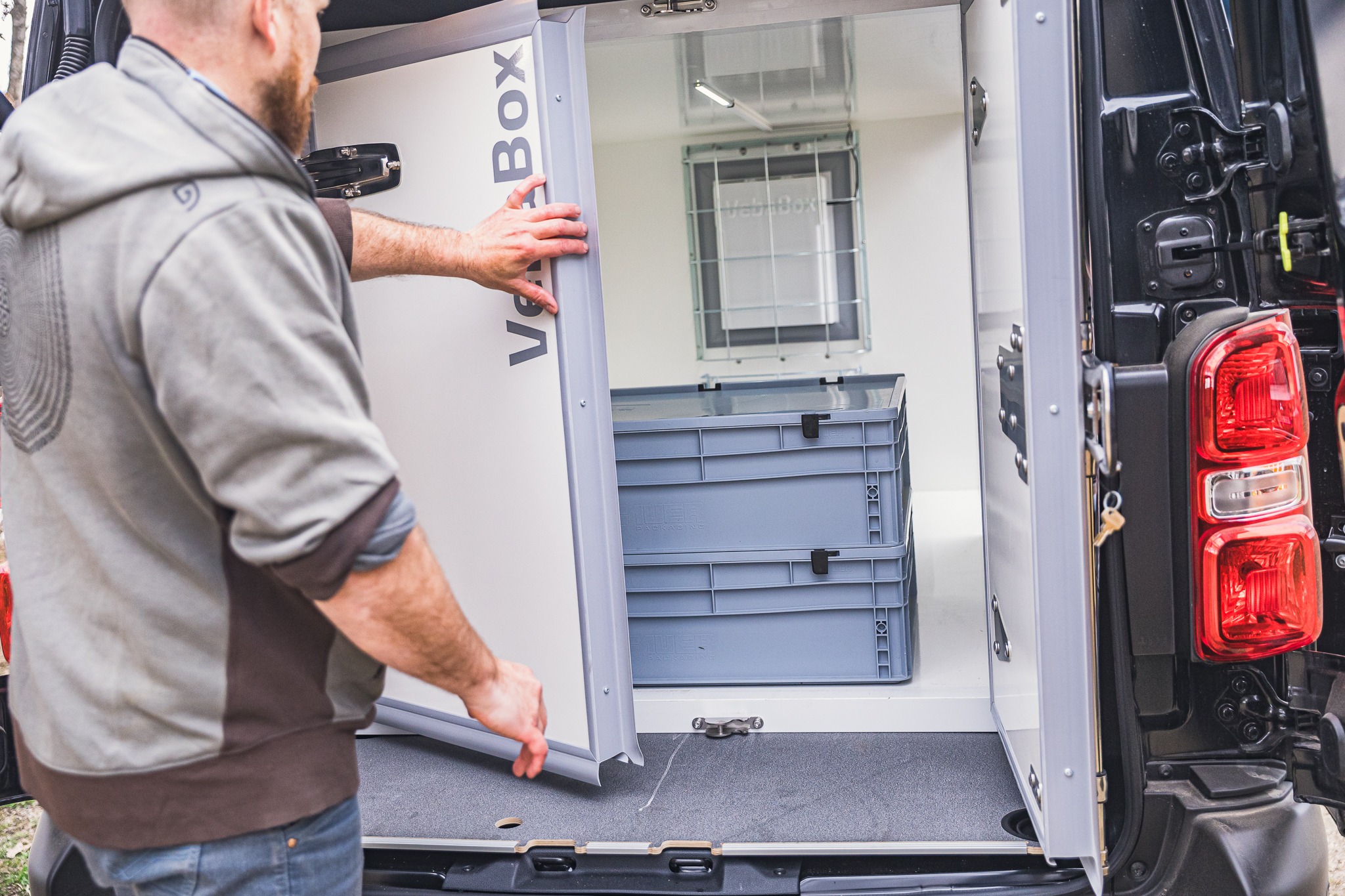
The alternative to the refrigerated van
What is the best alternative to a refrigerated van for local food and beverage deliveries? The best alternative to a refrigerated van for local food and beverage deliveries is a removable temperature-controlled box system that conditions the cargo space itself rather than the entire vehicle. Active systems with powered refrigeration suit recurring routes with frequent door openings and multiple stops, while passive systems using insulation and and cooling plates work well for shorter journeys and smaller consignments. Both allow a standard van or car to carry chilled or frozen products on one round and other goods on the next, eliminating the need for dedicated refrigerated vehicles when volumes and product types vary.
Read more
Add transport capacity without converting a vehicle
How can laboratories add temperature-controlled transport capacity without converting an entire vehicle? Laboratories can install removable, cargo-focused temperature-control systems in conventional vans or other suitable vehicles. Rather than conditioning the entire load space, these systems control the smaller environment immediately around the samples, allowing standard fleet vehicles to transport temperature-sensitive material without permanent refrigeration conversion.
Read more