

The challenge with dedicated vans
A dedicated refrigerated van holds a validated temperature range throughout transport, with permanently installed equipment familiar to regulatory bodies. But it commits that vehicle to a single purpose, leaving capacity unused when your schedule mixes temperature-controlled and ambient deliveries.
Conditioning the load, not the vehicle
Portable temperature control creates and maintains the validated environment around the pharmaceutical products themselves, rather than conditioning the entire cargo space. The controlled zone shifts from the vehicle to the container, making a standard van the transport platform and the removable unit the controlled environment that travels with the load.
Configurations that maintain validation
Several configurations support validated transport:
Active systems use powered refrigeration or heating, drawing power from vehicle electrical systems, mains electricity, or independent sources like VebaBox Active, maintaining temperature through transport, warehouse holding and handover without continuous vehicle connection.
Passive containers rely on insulation and conditioned cooling plates (PCM) to hold the target range for defined durations, like VebaBox Passive, requiring no power during transport while the thermal mass buffers against external swings.
Dual-temperature configurations address loads with different requirements, allowing one vehicle to carry products at multiple validated ranges, refrigerated and controlled room temperature, or frozen and chilled.
Hybrid models pair active vehicle transport with passive protection during higher-risk handover and last-mile stages.
Monitoring systems integrate independent temperature logging, providing the continuous data trail GDP compliance requires.
Validation depends on the system, not the box
The equipment is one component in a validated system, not a standalone guarantee. Maintaining validated temperatures depends on consistency across vehicles, routes and handovers: containers preconditioned correctly, validated procedures followed for loading and transfer, continuous monitoring reviewed, and contingency processes in place for delays or equipment issues. The validation covers the whole chain, not just the box.
When this approach makes sense
For distributors managing varied cargo types, fluctuating volumes or mixed temperature requirements, conditioning the load rather than the vehicle allows you to scale temperature-controlled capacity without scaling your refrigerated fleet. The trade-off is operational discipline. Portable systems require validated procedures at every stage, but for distributors already operating under GDP, this fits within familiar quality frameworks.
You might also be interested in
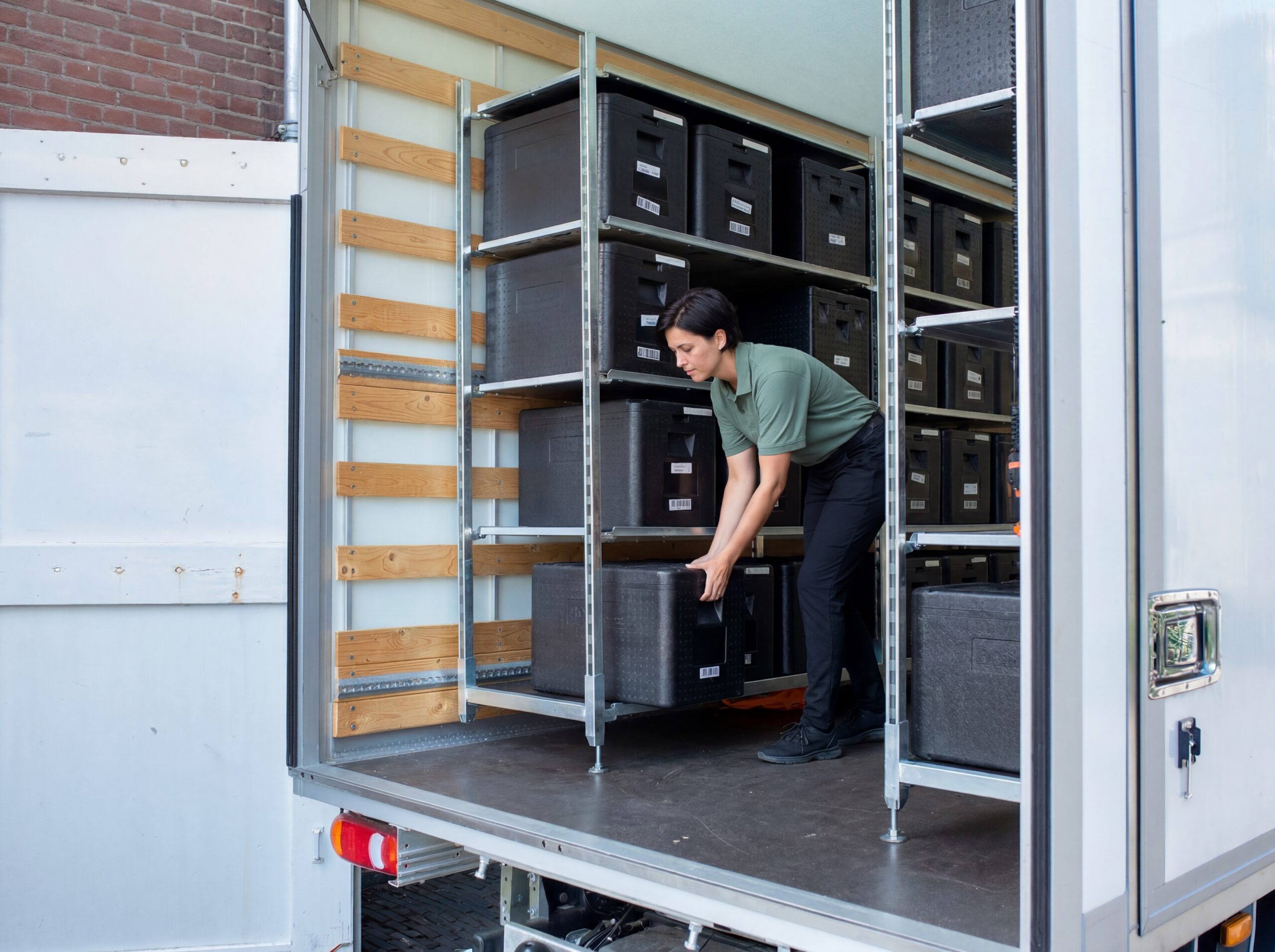
Carrying multi-temperature goods on one route
How can a delivery vehicle carry chilled, frozen and ambient products on the same route? A delivery vehicle can carry chilled, frozen and ambient products on the same route by using separate temperature-controlled compartments or boxes. This approach creates independent thermal conditions around each product group, allowing different temperature zones to coexist in a single vehicle without requiring the entire load space to operate at one fixed temperature.
Read more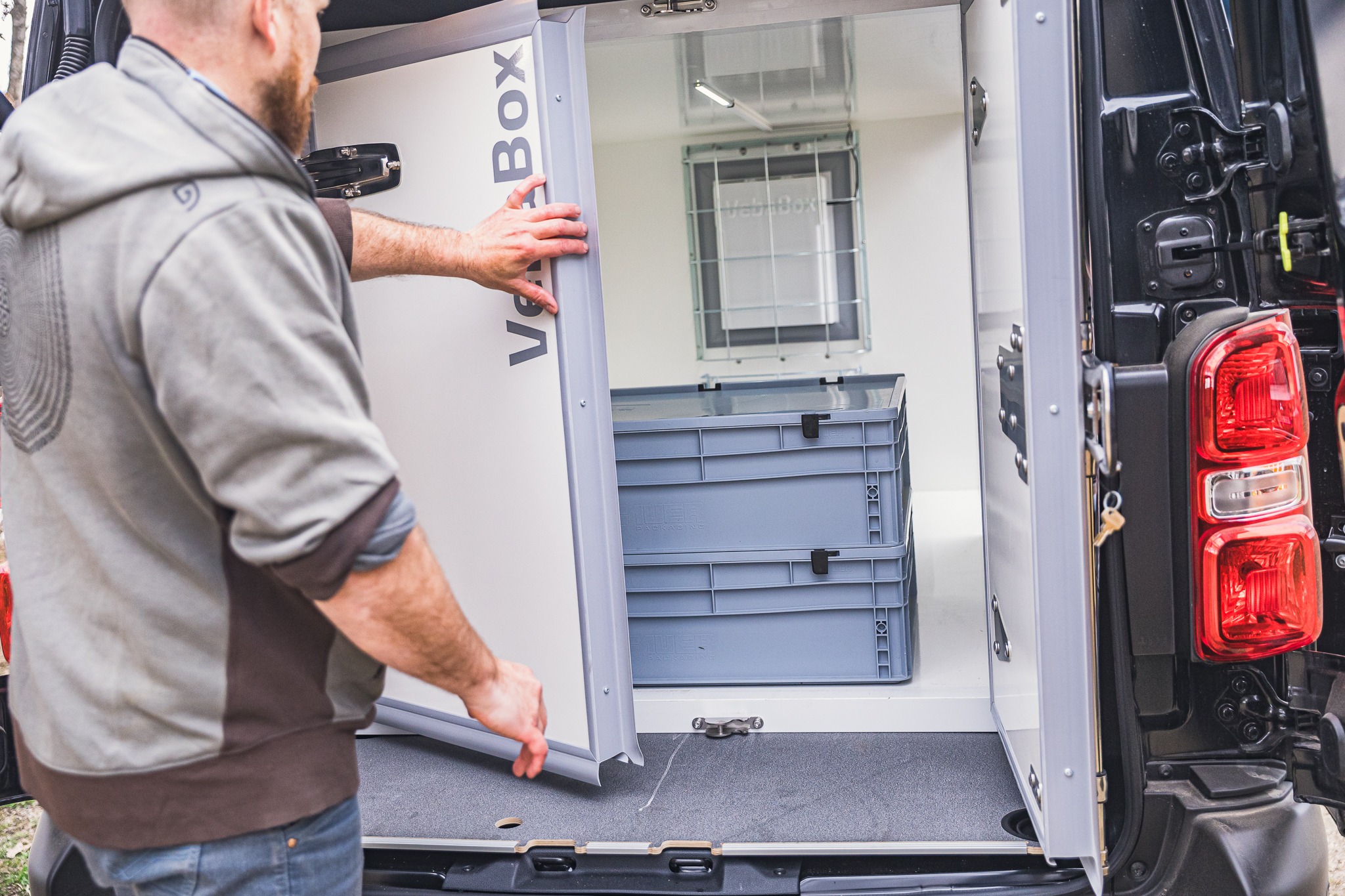
The alternative to the refrigerated van
What is the best alternative to a refrigerated van for local food and beverage deliveries? The best alternative to a refrigerated van for local food and beverage deliveries is a removable temperature-controlled box system that conditions the cargo space itself rather than the entire vehicle. Active systems with powered refrigeration suit recurring routes with frequent door openings and multiple stops, while passive systems using insulation and and cooling plates work well for shorter journeys and smaller consignments. Both allow a standard van or car to carry chilled or frozen products on one round and other goods on the next, eliminating the need for dedicated refrigerated vehicles when volumes and product types vary.
Read more
Add transport capacity without converting a vehicle
How can laboratories add temperature-controlled transport capacity without converting an entire vehicle? Laboratories can install removable, cargo-focused temperature-control systems in conventional vans or other suitable vehicles. Rather than conditioning the entire load space, these systems control the smaller environment immediately around the samples, allowing standard fleet vehicles to transport temperature-sensitive material without permanent refrigeration conversion.
Read more